

The Denver neighborhoods that feel most like Chicago are Washington Park for Lincoln Park, the Highlands and Tennyson Street for Wicker Park and Andersonville, RiNo for the West Loop, Capitol Hill for Lakeview, and Park Hill for Oak Park.
Most people moving from Chicago to Denver already know what they want in a neighborhood. They want a commercial street they can walk to, older brick houses on a real grid, alleys behind the lots, and a big park that anchors the area. What they usually don’t know is which Denver neighborhoods deliver that, because the city looks nothing like Chicago from a plane window: lower, more spread out, and with mountains where the lake should be.
Up close, the resemblance is stronger than people expect. Denver’s core neighborhoods were largely built in the same streetcar era as Chicago’s, on a grid, with alleys, brick construction and neighborhood retail at the old car stops. The scale is smaller, but the pattern is familiar.
Jason Sirois, a Denver Realtor with FORM at Compass Denver and an Applewood resident, works with buyers relocating from the Chicago area throughout the year. The pairings below are how he sorts Denver for them: start from the Chicago neighborhood you know, then look at the Denver area that shares its bones. If you’re earlier in the process, our guide on what to know before moving from Chicago to Denver covers the practical side.
If You Know Lincoln Park: Washington Park
Lincoln Park is defined by its park, its tree-lined residential streets and a steady run of shops and restaurants within walking distance. Washington Park is the closest Denver equivalent. The park itself covers about 165 acres, with two lakes, a historic boathouse, a loop that runners and cyclists circle all day, and large formal flower gardens. It is smaller than Chicago’s lakefront park, but it plays the same role.
The housing stock is also familiar. The streets around the park are lined with brick Denver Squares, Craftsman bungalows and Tudors built largely between 1900 and 1940, mixed with larger new homes where older houses were replaced. For shopping and dining, Old South Gaylord Street sits just east of the park, and South Pearl Street is a short walk southwest in Platt Park.
The main difference is density. Wash Park is mostly detached single-family homes rather than the greystones, two-flats and courtyard buildings that fill much of Lincoln Park. Buyers who want condo or townhome options near the park usually look at West Wash Park, on the far side of Downing Street, where small apartment buildings and townhomes are more common.
If You Know Wicker Park, Bucktown or Andersonville: The Highlands and Tennyson Street
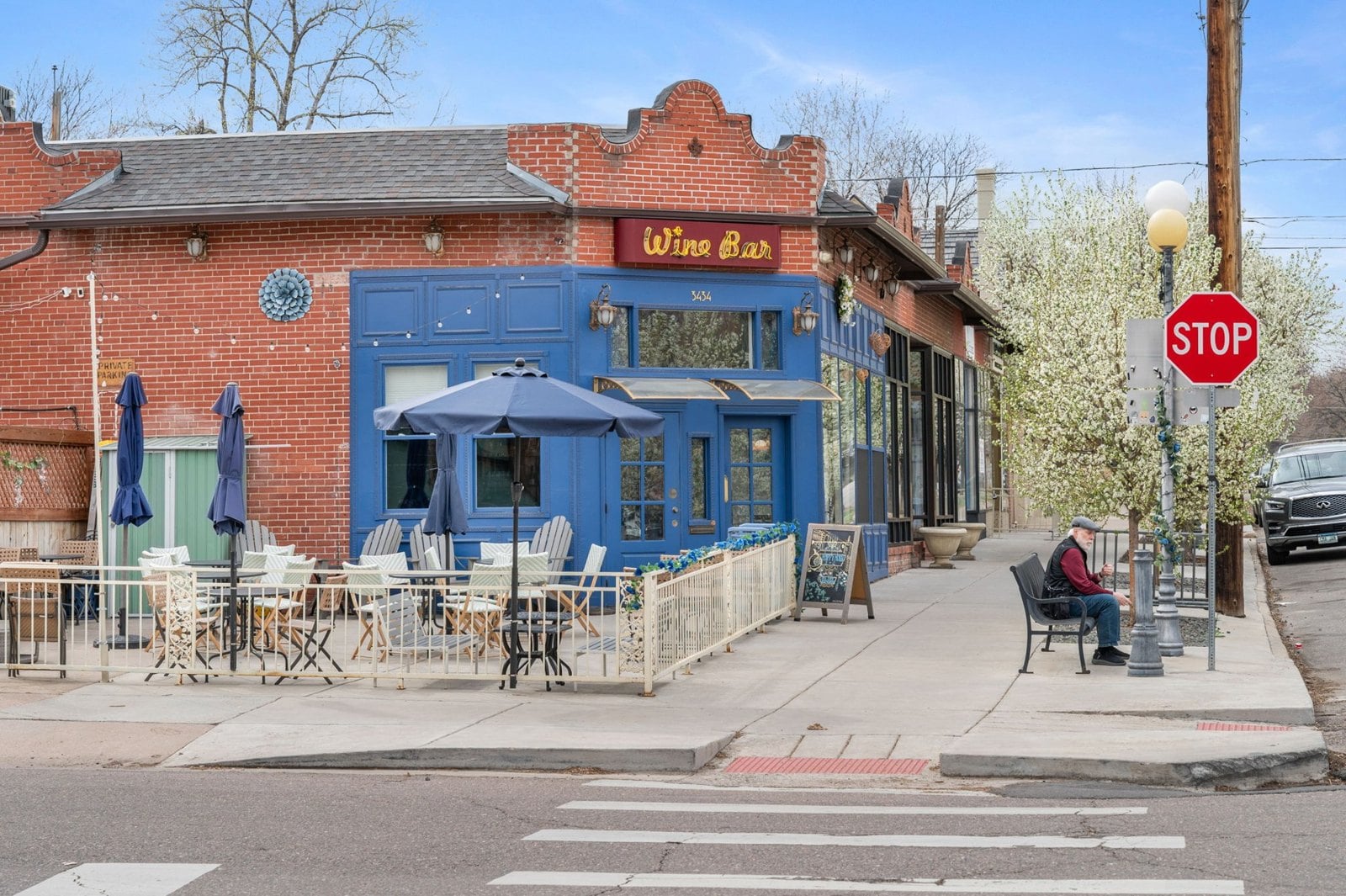
Chicago’s northwest-side neighborhoods are about the commercial strip: Milwaukee Avenue, Damen, Clark Street. Denver’s version sits northwest of downtown, across the South Platte River, in the area locals call the Highlands.
The Highlands combine several strips within a short walk or bike ride of one another:
- West 32nd Avenue at Lowell Boulevard (Highland Square): a compact run of cafes, a bakery, boutiques and restaurants closest in feel to Andersonville’s stretch of Clark Street.
- Tennyson Street in Berkeley: roughly a dozen blocks of restaurants, galleries, bars and shops, the nearest match to Wicker Park and Bucktown.
- Lower Highland (LoHi): newer townhomes and restaurants on the bluff facing downtown, with pedestrian bridges into the city center, much like the River West side of Milwaukee Avenue.
The architecture is where the Highlands feel most like old Chicago. The Potter Highlands Historic District, bounded by West 38th Avenue, Zuni Street, West 32nd Avenue and Federal Boulevard, holds roughly 700 buildings, and History Colorado’s listing notes a mix of Victorian, Foursquare, Prairie, Colonial Revival and Craftsman homes. Inside a Denver historic district, exterior changes go through design review, so plan any addition with that in mind.
If You Know the West Loop or Fulton Market: RiNo and LoDo
The West Loop turned warehouses and meatpacking buildings into restaurants, offices and lofts. Denver has two versions of that story. Lower Downtown, or LoDo, is the older one: brick warehouses around Union Station converted to lofts, with restaurants, bars and Coors Field within a few blocks. It is the closest Denver match to the River North and West Loop loft scene of the early 2000s.
River North, or RiNo, is the newer one, and it is closer to today’s Fulton Market. Former industrial buildings along Brighton Boulevard and Larimer Street now hold food halls, breweries, galleries and offices, and the area’s murals are a well-known part of its identity. Housing leans toward newer condos, lofts and townhomes rather than detached homes.
Both areas trade yard space for walkability. A condo or loft in either means an HOA, so its reserves and rules deserve the same scrutiny you’d give a Chicago condo association’s budget.
If You Know Lakeview or Lincoln Square: Capitol Hill, Cheesman Park and Sloan’s Lake
For Chicago buyers who like dense, older neighborhoods with vintage apartment buildings, Capitol Hill and Cheesman Park are the obvious comparison to Lakeview. The housing is a mix of historic mansions, early 20th century brick apartment buildings and small condos, and the retail runs along Colfax Avenue and 13th Avenue. Cheesman Park and the Denver Botanic Gardens next door give the area a large green space, much as the lakefront does for Lakeview.
If what you’ll miss most is the water, look west. Sloan’s Lake is a 177-acre lake inside a roughly 290-acre park, the second-largest park in the city, with a paved trail of about two and a half miles around the shore. The streets around it mix older bungalows with modern townhomes and condos, and the east side of the lake looks back at the downtown skyline. It isn’t Lake Michigan, but for a Chicago buyer it scratches the same itch: a daily walk or run beside open water.

If You Know Oak Park or Evanston: Park Hill and the Near West Suburbs
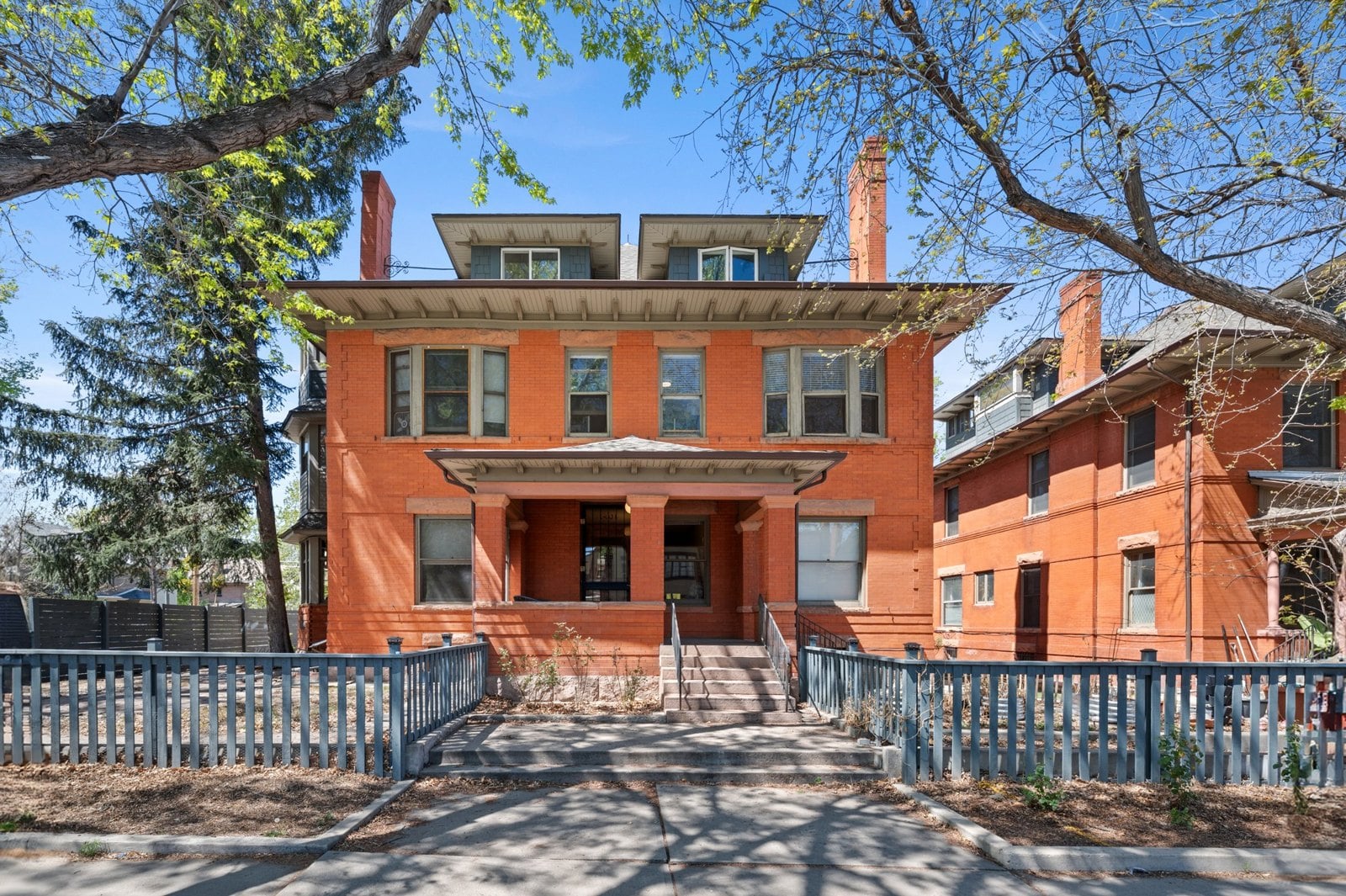
Oak Park and Evanston draw buyers for architecture, big trees and larger lots a short train ride from downtown. Park Hill, east of City Park, is the closest match inside Denver. Its streets carry a wide range of early 20th century styles, including Tudors, Foursquares, bungalows and some Prairie-influenced homes, on generous lots with mature trees and parkway strips.
Outside the city limits, Applewood and Wheat Ridge offer the suburban side of the comparison, with larger lots and midcentury ranches closer to the foothills, in exchange for a longer trip downtown.
What Doesn’t Translate From Chicago to Denver
A few things surprise Chicago buyers even in the neighborhoods that feel most familiar:
Transit. Denver has light rail and commuter rail through RTD, but nothing close to the density of the ‘L.’ Most of the neighborhoods above are walkable for daily errands, yet commuting without a car depends heavily on where you work.
Two-flats are rare. Chicago’s owner-occupied two-flat, with a rental unit covering part of the mortgage, has few direct Denver equivalents. The closest options are duplexes, homes with a garden-level unit, or adding an accessory dwelling unit, which Denver now allows across much of the city under its 2024 zoning changes, subject to permits and design standards.
Basements and systems. Denver homes of the same era often have basements, but many older houses lack central air conditioning, and radon testing is a standard part of inspections here. Sewer line scopes are just as important as they are in Chicago.
Frequently Asked Questions
What is the most Chicago-like neighborhood in Denver?
For most Chicago buyers, it’s the Highlands. The mix of brick Victorians and Foursquares, several walkable commercial streets, and views of downtown across the river feel closest to Chicago’s northwest side. Washington Park is the stronger match if a big neighborhood park matters most.
Is there anything in Denver like a Chicago two-flat?
Not many. Look for duplexes, older homes with a separate garden-level unit, or a single-family home with space for an accessory dwelling unit. Denver’s 2024 zoning update expanded where ADUs are allowed, but each project still needs permits and must meet design standards.
Which Denver neighborhood is closest to Lake Michigan living?
Sloan’s Lake, on Denver’s west side, has a 177-acre lake with a trail around it and downtown views from the east shore. Washington Park’s two smaller lakes are the other option if you want water and walkable streets together.
Is Denver walkable like Chicago?
In pockets, yes. The Highlands, Wash Park, Capitol Hill, LoDo and RiNo all have walkable commercial streets. The difference is that Denver’s walkable areas are less continuous than Chicago’s, so the specific block you choose matters more.
Do Denver homes have alleys and detached garages like Chicago homes?
Many do. Most of central Denver was platted on a grid with alleys, so detached garages off the alley are common in older neighborhoods. Newer infill often uses the alley for a two-car garage or a carriage-house-style accessory unit above it.
If you’re sorting Denver neighborhoods from Chicago, Jason Sirois and the team at FORM at Compass Denver are glad to walk through the options with you, in person or on a video tour. This post is general information about Denver neighborhoods and is not legal, tax or financial advice; zoning, permitting and historic district rules change, so confirm current requirements with the City and County of Denver before planning a project.