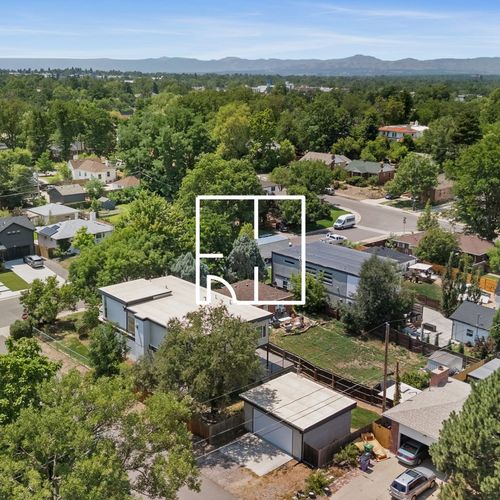

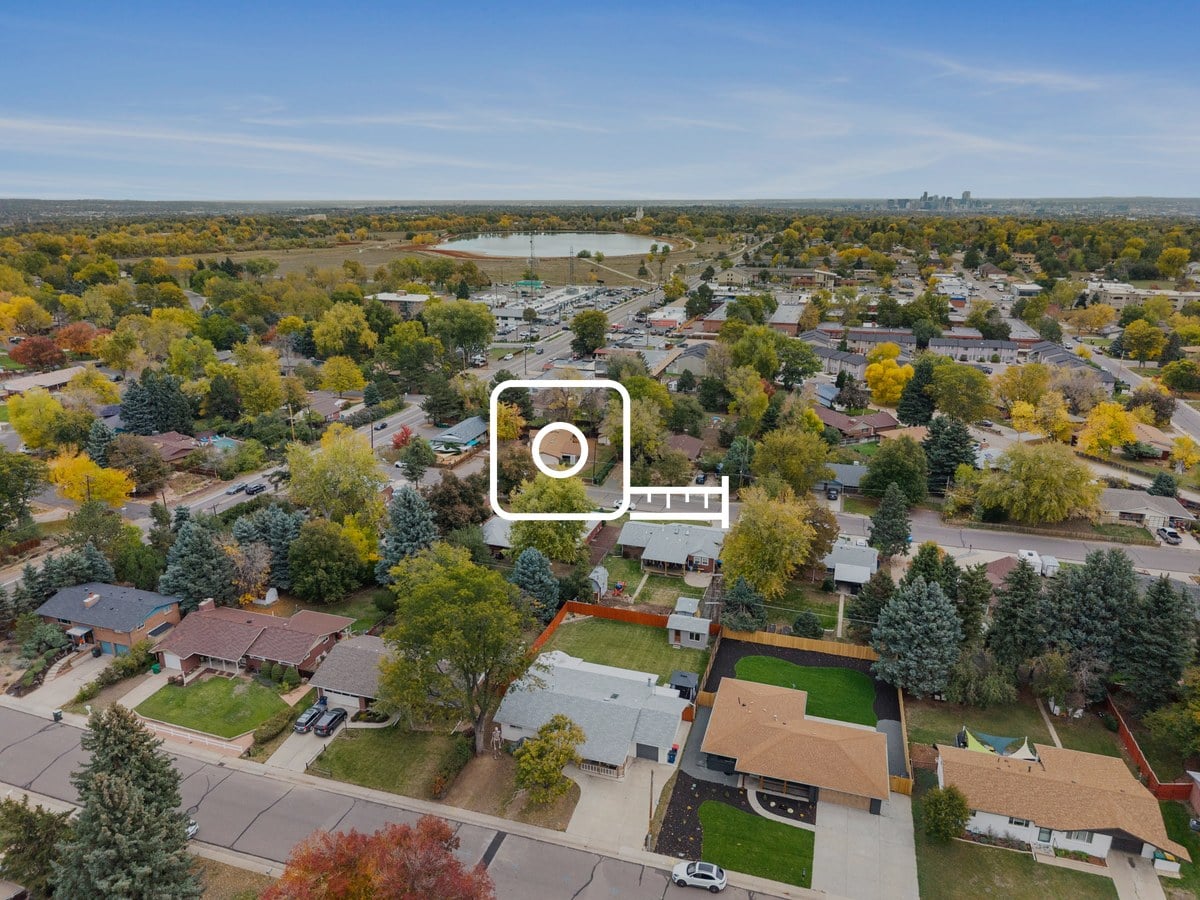
Yes. Paramount Heights is inside the City of Wheat Ridge, where one accessory dwelling unit, attached or detached, is allowed with a single-unit home. It can be up to 1,000 square feet or half the main house’s size, whichever is smaller, with a 500 to 750 square foot minimum allowance.
Paramount Heights is a small hillside neighborhood just west of Kipling Street, with homes on Hillside Drive, Skyline Drive and Rangeview Drive and two houses that appeared in the Denver Parade of Homes in 1953 and 1954. Mid-century lots and floor plans raise a common question from owners: can the lower level, a wing of the house or a space over the garage become a separate living unit?
The answer starts with which government’s rules apply. Paramount Heights is often grouped with the Applewood area, but it sits inside Wheat Ridge city limits. That means Wheat Ridge’s zoning code governs an ADU here, not Jefferson County’s rules that apply in unincorporated Applewood neighborhoods such as Applewood Knolls.
Jason Sirois, a Denver Realtor with FORM at Compass and an Applewood resident, walks through what Wheat Ridge allows today, how the size limits work on a mid-century home, what changed in 2025, and what to know about an existing unit that was never permitted.
Does Wheat Ridge allow ADUs in Paramount Heights?
Yes. Wheat Ridge City Council approved ADUs with Ordinance 1744 in July 2022, effective August 15, 2022, and has amended the rules twice since, most recently in May 2025. Under Section 26-646 of the city code, an ADU is allowed as an accessory use to a single detached home in all residential and agricultural zone districts, and in planned developments that allow single detached homes.
The city’s ADU page describes an ADU as a smaller, independent home on the same property, with its own living, sleeping, cooking and bathroom space. It can be:
- A converted basement or other part of the existing house
- An addition to the house
- A new detached building, such as a cottage or a unit above a garage
- A converted detached accessory structure
Only one ADU is allowed per property, and ADUs are not allowed on duplex or multi-unit properties.
How big can an ADU be in Paramount Heights?
Size depends on the main house. The code caps an ADU at 50% of the primary home’s gross floor area or 1,000 square feet, whichever is smaller. Regardless of that limit, an ADU between 500 and 750 square feet is always allowed as long as it is smaller than the main house.
| Main house gross floor area | 50% of main house | Largest ADU allowed |
|---|---|---|
| 1,300 sq ft | 650 sq ft | 750 sq ft (minimum allowance applies) |
| 1,800 sq ft | 900 sq ft | 900 sq ft |
| 2,400 sq ft | 1,200 sq ft | 1,000 sq ft (cap applies) |
Examples calculated from Wheat Ridge Code Section 26-646 B.3. Gross floor area includes an attached garage, per the city’s ADU page.
Two exceptions matter for mid-century homes. An attached ADU in a basement or on a second floor can exceed the size limit, as long as it is no larger than the first floor of the same structure. And for a detached ADU, the whole structure’s footprint is capped at 1,000 square feet, counting any attached garage, carport, porch or deck.
What other rules apply?
Beyond size, the code and the city’s ADU page set these standards:
| Rule | Wheat Ridge requirement |
|---|---|
| Height, detached ADU | 25 feet maximum |
| Height, attached ADU | Same as the main house |
| Setbacks and bulk plane | Zone district standards apply |
| Parking | No additional spaces required |
| Fire access | All sides within 150 feet of a fire access road, or sprinklers may be required |
| Fire separation | Required between an attached ADU and the main home |
| Sale | Cannot be sold separately from the main house |
Utilities are a step owners often miss. Wheat Ridge does not run water or sanitation service, so the building permit application must show proof that the design was submitted to the property’s water and sanitation districts. Those districts set their own requirements and may charge fees, which vary by district and by ADU size.
Do I have to live there, and can I rent it out?
Wheat Ridge removed its broad owner-occupancy requirement in 2025, when it updated the code to match Colorado’s House Bill 24-1152. The state’s ADU program page explains that covered cities generally cannot require owner occupancy, except at permit application or for a short-term rental license.
Under the current code, owner occupancy applies only when the ADU is operated as a partial-home short-term rental, which requires a license and an owner living in either the main house or the ADU. The city’s ADU page says an ADU cannot be used as a whole-home short-term rental. Longer-term rental of an ADU does not carry an owner-occupancy requirement in Section 26-646.
What if my house already has an unpermitted apartment?
Some older homes have a lower-level kitchen or a finished space that functions as a separate unit but was never approved. Wheat Ridge offers an application to legalize ADUs that existed before August 2022. The grace period that offered possible relief from permit requirements and fees ended on August 15, 2026, but the city still accepts applications.
Most existing units need a life safety inspection. Some can be approved as-is, some need changes such as egress, electrical upgrades or fire separation, and some cannot be legalized as independent units. We covered the deadline and what it means in detail in our post on whether an unpermitted Wheat Ridge basement apartment needs to be legalized.
For a buyer or seller, the practical question is the paperwork. A listing that mentions a second kitchen or separate suite should show whether it is a permitted ADU, a legalized existing ADU or simply finished space.
How is Paramount Heights different from unincorporated Applewood?
Neighborhoods a few blocks apart can fall under different codes. Applewood Knolls and Applewood West are in unincorporated Jefferson County, so the county’s ADU rules and permit office apply there. For that comparison, see our post on building a detached ADU on a quarter-acre lot in Applewood Knolls. Paramount Heights permits go through the City of Wheat Ridge. For more on the city, visit our Wheat Ridge community page.
If you are thinking about adding an ADU, or buying or selling a Paramount Heights home with one, Jason Sirois and the FORM Team at Compass Denver are glad to look at the specifics with you.
Frequently Asked Questions
Is Paramount Heights under Wheat Ridge or Jefferson County ADU rules?
Wheat Ridge. Paramount Heights is inside Wheat Ridge city limits, so the city’s ADU code and building permits apply, even though the neighborhood is often grouped with Applewood.
What is the maximum ADU size in Wheat Ridge?
1,000 square feet or 50% of the main home’s gross floor area, whichever is smaller. An ADU of 500 to 750 square feet is always allowed if it is smaller than the main house.
Can I turn my basement into an ADU in Paramount Heights?
Yes, a basement can be an attached ADU. A basement ADU can exceed the normal size limit as long as it is no larger than the home’s first floor. Fire separation and building code requirements apply.
Do I need to add parking for an ADU in Wheat Ridge?
No additional parking is required. Parking rules for short-term rentals may apply if the ADU is licensed as a partial-home short-term rental.
Do I have to live on the property?
Only if the ADU is operated as a partial-home short-term rental. Wheat Ridge removed its broader owner-occupancy requirement in 2025.
Can I build a second story over my garage as an ADU?
Yes, if it meets the zone district’s setbacks and bulk plane. A detached ADU can be up to 25 feet tall, and the structure’s footprint, including the garage, cannot exceed 1,000 square feet.
This article is general information based on the Wheat Ridge Code of Laws (Section 26-646, version current as of August 24, 2026), the City of Wheat Ridge ADU page and Colorado Department of Local Affairs materials, reviewed October 30, 2026. It is not legal, tax or financial advice. Confirm requirements for your property with the City of Wheat Ridge and your water and sanitation districts.