
Homes within a few blocks of Washington Park carry a real premium in Denver, and it concentrates in the first three or four blocks, on the quiet interior streets, and on the handful of lots with an actual park view.
Almost every buyer who tours a home in West Wash Park or East Wash Park asks some version of the same question: how much of this price is the house, and how much of it is the park across the street? It is a fair question. Washington Park is 165 acres with two lakes, ten tennis courts, a lawn bowling green, a recreation center and two of the largest flower gardens in the city, according to FANS of Washington Park. People do not move here by accident.
The honest answer is that proximity is priced, but it is priced unevenly. It is not a flat percentage applied to every address inside the neighborhood boundary. It behaves more like a gradient that is steep for the first few blocks, flattens out quickly after that, and interacts with things that have nothing to do with the park at all: whether the block is quiet, whether the house has off-street parking, whether the lot is a standard 6,250 square feet or something bigger.
Jason Sirois, a Denver Realtor with FORM at Compass Denver, walks buyers and sellers through this trade-off constantly, and the pattern is consistent enough to plan around. Here is how the premium actually behaves.
What “proximity” means to a Wash Park buyer
Buyers are not measuring distance in feet. They are measuring behavior: whether they will use the park daily, weekly, or only when they make a point of it. That threshold sits around a five to seven minute walk, and it moves with who is walking. A couple with a dog treats eight blocks as nothing; a family with a stroller treats four blocks as the outer limit.
This is why the premium is front-loaded. A house on South Franklin Street facing the park and one six blocks west on South Downing Street are both fairly described as “in Wash Park,” and both are walkable. Only one turns the park into part of the daily routine without anyone deciding to go. That is what buyers pay for, and why perimeter listings draw showings faster than their finish level alone would justify.
The premium is also partly about quiet. The interior streets between East Virginia Avenue and East Louisiana Avenue feel different from anything within a block of South University Boulevard, and buyers register that on a walkthrough whether or not they can articulate it.
How the premium fades block by block
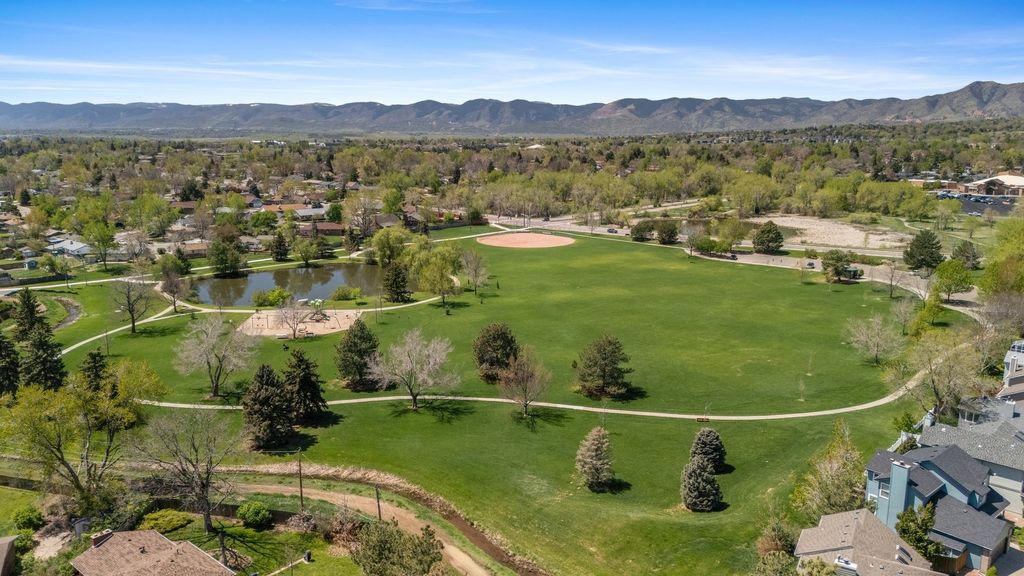
The steepest part of the curve is the first block. A home facing the park, with an unobstructed sightline to Smith Lake, Grasmere Lake or the open meadow, sits in its own small category, and the supply is fixed by the shape of the park itself. Those addresses hold value even when the broader metro slows.
From there the drop is real but not dramatic. Two to four blocks off the park still reads as core Wash Park to almost every buyer, and pricing reflects that. Somewhere past five or six blocks the conversation shifts. The home starts competing with Platt Park, Cory-Merrill and Bonnie Brae rather than with the park-adjacent inventory, and buyers start weighing square footage and finish level more heavily than walk time.
That crossover is where sellers most often misprice. A house eight blocks out, priced as though it were two blocks out, sits, reduces, and sells for less than a correctly priced version of itself would have. The neighborhood name is not the price driver; the block is. Our home sale calculator is a reasonable starting point before a full comparative analysis.
What buyers pay extra for besides distance
Distance is the headline, but several things stack on top of it, and a few of them matter nearly as much:
- A real view. Facing the park is worth more than being the same distance away on a side street with no sightline.
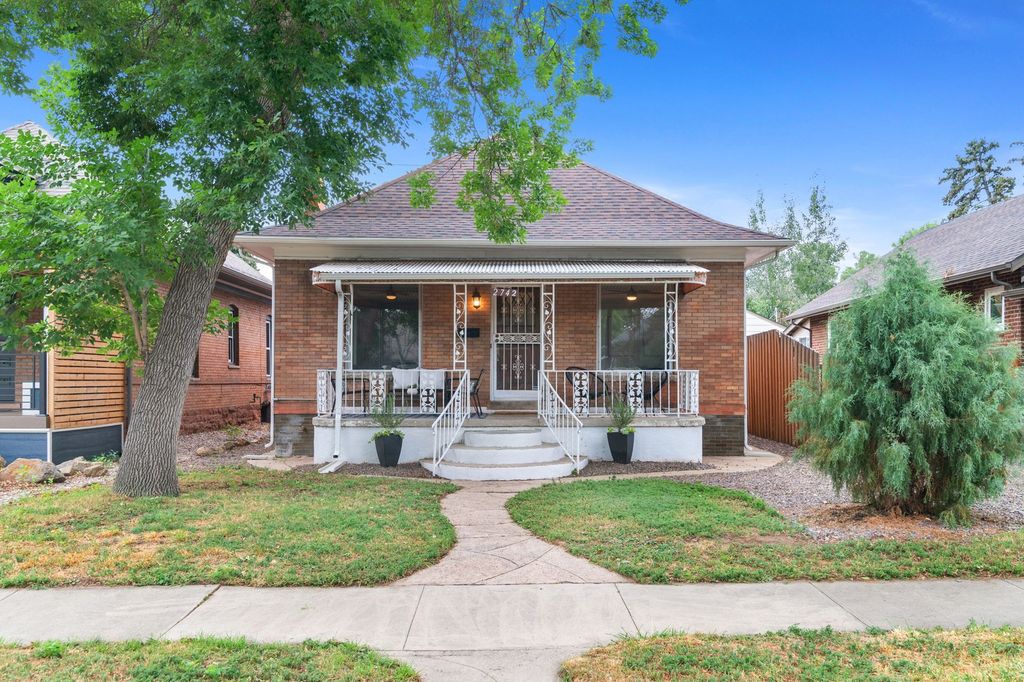
- Which side of the park. West Wash Park runs smaller and denser with more bungalows and more infill; East Wash Park skews toward larger lots and larger homes. They are different products at different price points.
- Off-street parking. On the blocks closest to the park, weekend parking pressure is real, and a garage or an alley space is a genuine value line item.
- Walkability to something other than the park. Being close to both the park and the South Gaylord Street shops, or to Old South Pearl Street, is a meaningfully stronger position than the park alone.
- Lot width. A 50-foot lot supports a different future than a 37.5-foot lot, and buyers who plan to expand price that in.
Four of those five are permanent, which is much of why the neighborhood holds up: the things commanding the premium cannot be manufactured elsewhere in Denver.
Where being close to the park does not help
Proximity is a floor, not a shield. A park-adjacent home with an aging roof, an original sewer line, an outdated panel and a wet basement still gets picked apart in inspection, and buyers in this price band are thorough. The premium raises the ceiling on what a home can be worth; it does not lift the price of a house that is not ready to sell.
It also does not offset a functional problem. A two-bedroom, one-bath layout with no path to a third bedroom competes against a shrinking pool of buyers no matter how good the location is, and a home backing to a busy arterial is discounted for that whether or not the park is a block away.
And proximity does not rescue a mispriced launch. Metro conditions still set the backdrop, and the monthly DMAR Market Trends reports are the cleanest public read on inventory and pace. A Wash Park home that comes out high and then chases the market down lands where any other Denver listing that does that lands. We covered the timing question in more detail in our post on whether now is a good time to sell near Washington Park.
What this means if you are buying versus selling
If you are buying, the practical question is what you give up to be close. The same budget usually buys noticeably more house four to six blocks out, or in Platt Park or Cory-Merrill, than it does on the perimeter. Households that will genuinely use the park several times a week tend to be glad they paid for the blocks; households that mostly wanted the address tend to wish they had bought the extra bedroom.
If you are selling, price the block rather than the neighborhood, and spend on what buyers in this pocket actually check: roof, sewer scope, electrical, basement moisture, and a clean, well-lit presentation. Cosmetic readiness matters more here than large-scale renovation, because the buyer pool is already committed to the location and is mainly working out what they will have to fix in year one. If you want a read on a specific address, get in touch and we will put real comparable sales behind it.
Frequently Asked Questions
How many blocks from Wash Park still counts as “Wash Park”?
Buyers treat roughly the first four to six blocks as core Wash Park. Past that, homes compete with Platt Park, Cory-Merrill and Bonnie Brae on space and finish rather than walk time. The official boundaries are wider than the pricing gradient.
Is a park view worth more than a short walk?
Generally yes, because it is rarer. There is a finite number of homes facing the park, and that supply never grows. A view lot and a lot two blocks away can be similar in walk time but sit in different pricing tiers, particularly for buyers who spend a lot of time at home.
Does the Wash Park premium hold up in a slower market?
It has historically held better than the metro average, largely because supply is fixed and demand is location-committed. That is not a guarantee. In a slower market the premium tends to compress on the outer blocks first while the park-facing tier stays comparatively firm.
Are West Wash Park and East Wash Park priced the same?
No. West Wash Park generally means smaller lots, more bungalows and more infill; East Wash Park means larger lots and larger homes. Both are desirable, but they draw different buyers and should be compared against their own side of the park.
Does being on the park loop road hurt or help?
Mostly it helps, because it comes with the view. The offsets are weekend foot and bicycle traffic, event days and parking pressure, which is why buyers who want quiet above all sometimes prefer an interior street a block or two back.
Should I pay more for park proximity or for more house?
It depends on how you will actually live. If the park will be part of your weekly routine, the blocks are worth buying. If you work from home and need a fourth bedroom or a real office, the extra space usually serves you better, and you can reach the park by bike in minutes from well outside the premium zone.
This article is general information about the Denver residential market and is not appraisal, tax, or legal advice. Property values depend on the specific address, condition, and current market conditions. For guidance on your situation, consult a licensed professional.