


In Belcaro, an older home sells well without being turnkey — but a dated interior gets noticed. Before selling, cosmetic work like paint, floors and a light kitchen refresh usually pays for itself; a gut renovation usually doesn’t.
The question comes up at nearly every listing appointment in Belcaro. The house is handsome and solidly built, the lot is generous — and the kitchen has not been touched since the original owners picked the countertops. Somewhere in the walk-through, the owner asks the question that really matters: do we spend money fixing this up, or sell it as it is?
The honest answer depends far less on the house than on what buyers in this pocket of Denver are already paying for. Belcaro is not a neighborhood where every home has to be turnkey to sell. It is also not one where a dated interior goes unnoticed. The right move sits in between, and it looks different for a 1955 ranch on a quiet interior street than for a larger home a block off Cherry Creek.
Here is how Jason Sirois, a Denver Realtor with FORM at Compass Denver, works through it on older central Denver homes: which projects earn their keep, which almost never do, and which path fits your timeline.
Start with what Belcaro’s housing stock actually is
Belcaro sits in south-central Denver — Cherry Creek to the north, South Colorado Boulevard east, East Tennessee Avenue south, South University Boulevard west. It takes its name from Belcaro, the Lawrence C. Phipps estate on Belcaro Drive. The Cherry Creek Trail runs along the northern edge under mature cottonwoods, Cherry Creek is minutes away, and Washington Park is a short drive west.
The housing runs from 1930s Spanish and Tudor revivals to large postwar brick ranches on generous lots, with a growing number of scrape-and-rebuild customs on the biggest parcels. That mix is the most important fact in this decision. When a buyer tours your older home, they are comparing it against two very different things — other original-condition houses, and new construction two streets over. Your renovation decision is really a decision about which comparison you invite.
A modest cosmetic budget positions you well against the first group and does nothing against the second. A gut renovation puts you in a fight you rarely win on price per square foot against a genuinely new house. The most profitable position is the top of the original-condition tier, not the bottom of the new-build tier.
The projects that usually earn their money back
National remodeling return data is directional rather than gospel, but it is consistent year over year and it lines up with what we see in central Denver. In the Cost vs. Value figures for the Mountain region, the projects that recoup the most are almost entirely modest and exterior: a garage door replacement recouped roughly 236% of its cost, a steel entry door about 186%, vinyl siding about 107%, and a minor midrange kitchen remodel — fronts, hardware, counters, appliances, not a new floor plan — about 110%. The full regional breakdown is in the Cost vs. Value report for the Mountain region.
The pattern is worth sitting with: the winners fix the first and last impression rather than reinventing the house. For an older Belcaro home, the highest-leverage pre-sale list usually looks like this:
- Interior paint in a neutral palette — the best dollar-for-dollar move on a dated interior
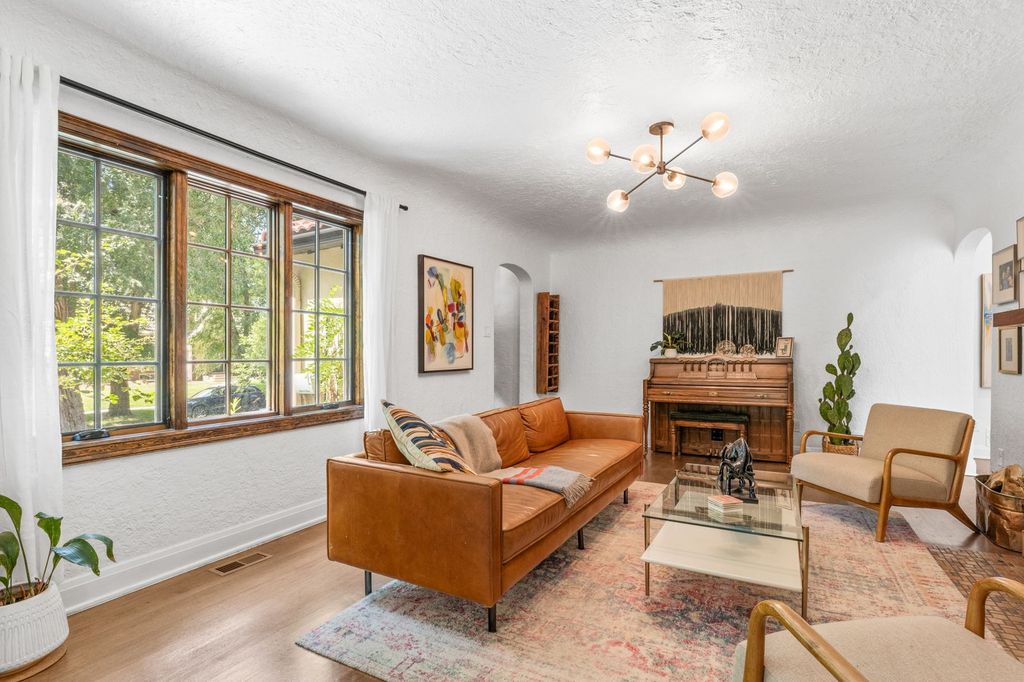
- Refinishing original oak floors rather than covering or replacing them
- Updated lighting and switch plates throughout, which quietly modernizes every photograph
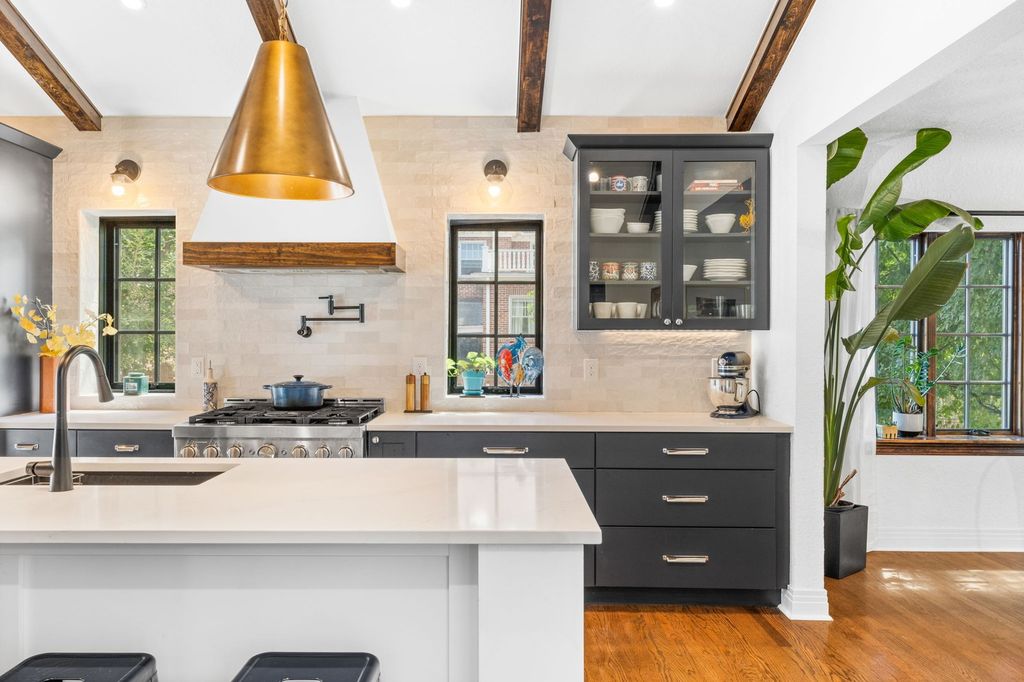
- A minor kitchen refresh: cabinet fronts or paint, hardware, counters, and a matched appliance set
- Garage door, front door, house numbers, mailbox, and exterior trim paint
- Landscaping cleanup, fresh mulch, and a working sprinkler system
- Deferred maintenance an inspector will find anyway — sewer line, roof, furnace, panel
That last item is not glamorous, but it prevents the most expensive thing that happens to sellers: a renegotiation after inspection, when leverage is gone.
The projects that rarely pay off right before a sale
The same data is just as clear about the other direction. A major midrange kitchen remodel recouped about 49% of its cost in the Mountain region; a midrange bathroom remodel about 69%. Both are wonderful projects if you plan to stay another decade. Neither is a good way to make money in the ninety days before listing.
Room additions, basement finishes, primary-suite expansions, and structural reconfigurations belong in the same category. They are expensive, they run months longer than anyone plans, they invite permit scrutiny, and they rarely move an appraisal as much as your bank balance. A half-finished addition is worse than none — buyers price uncertainty aggressively.
There is also a taste risk the data does not capture: a seller renovating to sell is making design decisions for a stranger, and the tile you love may be what a buyer plans to rip out. Neutral, reversible work carries almost none of that risk; a design statement carries all of it.
Three honest paths, and who each one fits
Sellers here end up on one of three paths, and all three can be right.
Sell as-is. This fits owners moving on a timeline, without cash to put in, or whose home is genuinely a scrape or full-gut candidate. Priced correctly and marketed to the right audience — builders and renovation buyers included — an as-is Belcaro home on a good lot draws real interest. The mistake is not selling as-is; it is selling as-is at a turnkey price.
Refresh, don’t renovate. This is where most sellers land, and usually where the money is. Paint, floors, lighting, landscaping, a light kitchen and bath freshening, plus deferred maintenance. A few weeks rather than a few months, the spend is bounded, and it lifts the home to the top of its comparison group without pretending to be new.
Full renovation before listing. This makes sense narrowly: you were renovating anyway and the sale moved up, or the house has a specific defect — an unusable kitchen, one bathroom for four bedrooms, failing systems — that caps the buyer pool no matter how the rest shows. Treat it as a development project with a budget and a schedule. Our list of trusted local vendors is a starting point for bids.
How to run the numbers on your own house
The decision gets less emotional once it is arithmetic. Start with a realistic as-is value, then a realistic renovated value — and be honest the second is a range, not a point. Subtract the project cost, the carrying costs while the house sits under construction, and a risk premium for running over budget, which most projects do. If the gap does not comfortably exceed all of that, refresh wins.

Two things make this easier. Look at what has actually sold nearby in both conditions rather than what is listed; DMAR publishes monthly Denver metro market trends reports with county- and city-level detail on how quickly homes are moving. Then model your own bottom line — our home sale calculator gets you to an estimated net proceeds figure, which is the number that actually matters. Our seller’s guide walks through the rest of the pre-listing sequence in order.
Frequently Asked Questions
Will I get my renovation money back when I sell?
Sometimes, and it depends entirely on scope. Modest cosmetic and exterior projects frequently return more than they cost. Large kitchen, bath, and addition projects typically return well under half in the Mountain region. The smaller and more universal the project, the better the return right before a sale.
Should I update the kitchen or the bathrooms first?
If you only have budget for one and the goal is selling, the kitchen — but a refresh, not a remodel. New fronts, hardware, counters, and a matched appliance set photograph like a much bigger project. A dated bathroom is forgiven more readily than a dated kitchen, provided it is clean, bright, and functional.
Do unpermitted improvements matter when I sell?
Yes. Unpermitted work has to be disclosed, and it surfaces anyway through appraisal square footage, inspection, or a buyer pulling permit history. It is not automatically a deal breaker, but it is far better handled early than discovered under contract. Denver’s Community Planning and Development department can confirm what is on record.
How far ahead of listing should I start work?
Four to six weeks for cosmetic work — paint, floors, lighting, landscaping. Three to four months for anything requiring permits, custom materials, or multiple trades. Build in a buffer: a house photographed mid-project loses more value than the project adds.
Is a Belcaro home worth more to a builder or a retail buyer?
It depends on the lot as much as the house. On a wide or corner lot where rebuilds have happened, builder interest is real and occasionally sets the top of the market. On a standard lot with a well-kept original home, retail buyers usually pay more.
What if I cannot afford any pre-sale work?
Then the priority order is cleaning, decluttering, and lighting — all cheap, all transformative in photographs — followed by honest pricing. An immaculate original home priced for its condition performs well. A cluttered one priced as though it were updated is the one that sits.
This article is general information about the home selling process and is not tax, legal, or financial advice. Renovation returns vary by property, condition, and timing, and the tax treatment of home improvements depends on your circumstances — please consult a qualified professional.