

San Diego buyers are among the easiest relocations to work with, because they usually know exactly what they want from a neighborhood. They want to be able to walk to coffee, they want to be outside most weekends, and they want a block with actual street life rather than a cul-de-sac. Denver can deliver all three — but the neighborhoods that do it are not always the ones a national search site surfaces first.
The instinct to look for “the Denver version of my old neighborhood” is a good one. What trips people up is mapping on price rather than on feel: the Denver neighborhood that costs what your San Diego neighborhood cost is frequently not the one that resembles it. It is worth sorting by character first and letting the budget conversation happen second.
Jason Sirois is a Denver Realtor with FORM at Compass Denver who works with relocating buyers across the central and west metro. Below is how he translates San Diego neighborhoods into Denver ones — not as a rule, but as a starting map that has held up across a lot of tours.
What actually changes in the move
Three things shift, and they matter more than square footage. First, the outdoors changes shape. You trade a coastline for a mountain range, which means the weekend rhythm moves from morning-and-evening to full-day trips, and it means proximity to I-70 and the foothills does for Denver buyers what proximity to the coast does in San Diego.
Second, the housing stock is older and more varied. San Diego’s core is heavy on Spanish Revival, Craftsman, and mid-century stucco; Denver’s is heavy on brick — bungalows and Denver Squares from 1900 to 1940, postwar ranches, and a substantial layer of modern infill duplexes and townhomes built in the last fifteen years. Basements are standard here and often finished, which changes how you read square footage.
Third, seasons come back. Denver is dry, sunny and high, with real winter and real summer. That is a bigger adjustment than most Californians expect, and it is also why so many transplants end up loving it. Plan for it in the house you buy: a garage matters here, south-facing driveways melt faster, and shade trees are worth real money in July.
If you loved North Park, South Park or University Heights
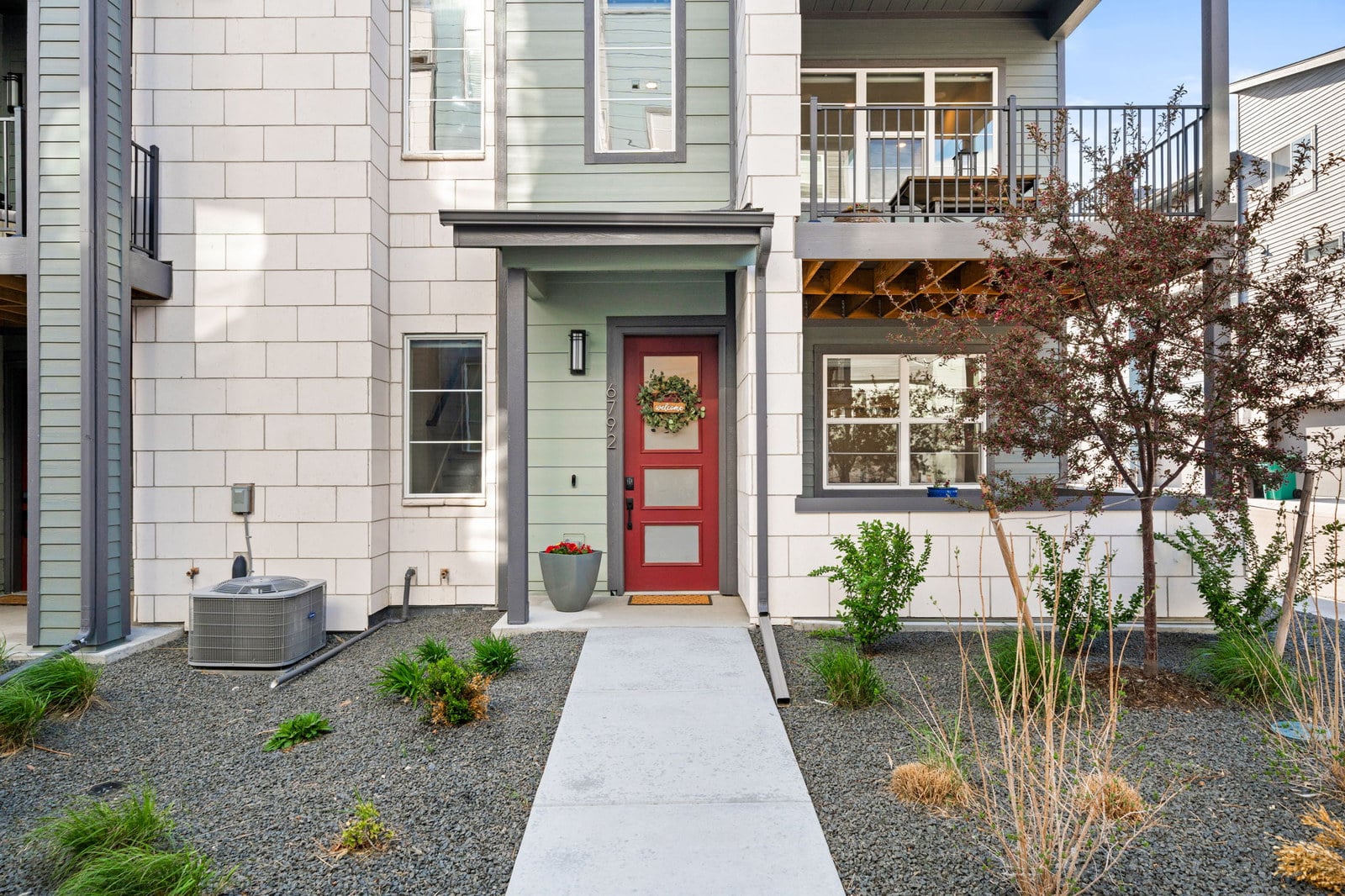
Look at Berkeley, Sunnyside and West Highland. This is the closest Denver comes to the North Park formula: bungalow-dense residential blocks organized around a low-rise commercial spine. Tennyson Street plays the role of 30th Street — independent restaurants, a couple of breweries, a monthly art walk — and Berkeley Lake Park anchors the north end.
Sunnyside, just east, is slightly less polished and slightly more mixed, with more original bungalows still trading alongside new duplexes. West Highland is a step up in price and a step down in grit, with Highlands Square as its commercial center. All three are genuinely walkable by Denver standards, which means you can live day to day without the car and still own one for the mountains.
If you loved La Jolla, Point Loma or Mission Hills
Look at Cherry Creek North, Hilltop, Bonnie Brae and Washington Park. These are Denver’s established, tree-canopied, higher-price neighborhoods, and they share the Mission Hills quality of feeling settled rather than trendy. Cherry Creek North is the most walkable of the group and the most retail-dense; Hilltop and Bonnie Brae are quieter, with larger lots and more mid-century and Tudor housing.
Washington Park itself is the one that most reliably wins San Diego buyers over. A 165-acre park with two lakes and a running loop, ringed by pre-war brick homes, is about as close as landlocked Denver gets to organizing a neighborhood around an outdoor amenity the way a beach neighborhood does.
If you loved Encinitas, Ocean Beach or Bird Rock
Look west. Edgewater, Wheat Ridge, Applewood and the Golden side of Lakewood are where the beach-town temperament lands here: smaller-scale, a bit unpretentious, close to the thing you actually moved for. Edgewater is a tiny city with its own main street and a public market, sitting right on the west edge of Sloan’s Lake. Wheat Ridge and Applewood trade walkability for lot size, mature trees, and a genuinely short drive to the foothills.
This is also the value story in the metro. Buyers who need a garage, a yard, and a workshop for gear routinely get more of all three on the west side than they will find in central Denver, and the commute penalty is modest — typically fifteen to twenty-five minutes to downtown outside of peak.
If you loved Little Italy, East Village or Bankers Hill
Look at LoHi, RiNo, Union Station and Uptown. These are Denver’s vertical, restaurant-forward, mostly-newer-construction neighborhoods, and they are where the condo and townhome inventory concentrates. LoHi has the best of both worlds — walkable density with a five-minute walk across the pedestrian bridge into downtown — while RiNo is the most nightlife-heavy and the most rapidly changing.
One caution specific to this segment: Denver’s condo market is much smaller than San Diego’s, and the differences between individual buildings are correspondingly larger. Read HOA budgets, reserve studies and special assessment history carefully before you fall for a floor plan. Ownership costs vary widely building to building.
The climate trade, honestly
Denver does not get 300 days of sunshine a year — that number is a long-running piece of local marketing, not a weather statistic. What it does get is a lot of sun, very low humidity, and winters that are sunnier and often milder day-to-day than newcomers expect, punctuated by heavy wet snow in March and April.
What you give up is the coastal thermostat. Summer afternoons get hot, and the temperature swing between morning and evening is large year-round. What you gain is a scale of outdoor access San Diego cannot match: hundreds of miles of urban trail, big city parks, and a mountain range within an hour. For most people making this move, that trade is the entire point.
- Walkable and lively: Berkeley, West Highland, LoHi, Cherry Creek North
- Park-centered and established: Washington Park, Bonnie Brae, Hilltop, City Park
- Space, garage, quick foothills access: Wheat Ridge, Applewood, Lakewood, Arvada
- Low-maintenance and urban: Union Station, RiNo, Uptown
- Small-town feel inside the metro: Edgewater, Golden, Littleton’s historic core
Frequently Asked Questions
Will I actually need a car in Denver?
Most households keep one. In LoHi, Union Station, Uptown or Cherry Creek North you can handle daily life on foot and RTD transit, but the mountains are the reason most people move here, and there is no transit substitute for a trailhead at 7 a.m. Plan for at least one car and garage space for gear.
Which Denver neighborhoods feel the most like coastal California?
Sloan’s Lake and Washington Park, for the water and the loop-walking culture, and Edgewater for the small-beach-town scale. None of them are a coast, but they scratch the same itch of organizing a neighborhood around an outdoor space.
Is Denver noticeably cheaper than San Diego?
Generally yes on housing, though the gap has narrowed considerably over the past decade and varies a great deal by neighborhood and property type. Colorado’s property tax burden is comparatively light, which helps the monthly math. Run the specific comparison with your lender rather than relying on a national cost-of-living index.
How bad is the altitude adjustment?
Coming from sea level, expect a real first two weeks: more thirst, worse sleep, and less stamina on stairs and trails. Most people feel normal within a month. Dry air is the longer-term change.
Where should I look if I want a yard and a garden?
The west and near-north metro. Wheat Ridge, Applewood, Arvada and Lakewood have the lot sizes; central Denver bungalow blocks have smaller yards but excellent tree canopy. Note that landscaping here is water-conscious by necessity — expect xeriscape and native planting to be the norm rather than the exception.
Should I rent for a year first?
It depends on how confident you are about which half of the metro you want. If you are torn between urban-walkable and space-and-foothills, a short rental in a central location is worthwhile. If you already know, there is little reason to wait. Our Perfect Home Finder is a good way to start seeing what matches your criteria before you fly out.
How many trips should I plan before buying?
One well-organized scouting trip is usually enough to narrow to two or three neighborhoods, and a second trip to write an offer. Tell us how you spend your weekends and what your commute needs to be, and we can build the tour around that instead of around whatever happens to be listed that week.
This article is general information about Denver-area neighborhoods and relocation, not tax, legal or financial advice. Neighborhood character, pricing, HOA costs and property tax treatment change over time and vary by property; please confirm details relevant to your situation with the appropriate professional.