

There is no single best Denver neighborhood, but there is a best one for you: set the budget first, then pick the one thing you refuse to trade away. Walkability, square footage, and a short commute rarely come in the same house at the same price.
Almost every buyer starts the same way: with a list of Denver neighborhoods pulled from articles and friends, asking which one is the good one. It is a fair question and the wrong one, because those neighborhoods are not competing for the same buyer. Berkeley and Applewood are both excellent places to own a home. They are not alternatives to each other.
The more useful exercise is to work in the other direction. Start with what you can comfortably spend, look honestly at what that number buys across the metro, and then decide which single feature you are least willing to give up. Once those two things are settled, the map narrows fast, usually to three or four areas rather than fifteen.
Jason Sirois, a Denver Realtor with FORM at Compass Denver, lives in Applewood and works across the west and central metro. What follows is the framework he uses with buyers who arrive holding a list, plus the honest trade-off behind each direction. It will not tell you where to live. It will tell you which questions decide it.
Start with the budget, because it sets the property type before it sets the place
The Denver Metro Association of Realtors reported a median close price of $605,000 across all residential property in July 2026. Split that figure and the picture gets much more useful: detached single-family homes closed at a median of $660,000, while attached homes, meaning condos and townhomes, closed at $380,000.
That $280,000 spread is the biggest lever in the whole decision, and it is a property-type lever rather than a neighborhood one. A buyer at $450,000 is not choosing between Sloan’s Lake and Wheat Ridge. They are choosing between an attached home in a walkable central neighborhood and a detached home further out. Both are real. They are just different lives.
Buyers who understand this early stop wasting weekends. Buyers who do not tour detached homes in neighborhoods priced well above their approval letter, then conclude Denver is impossible. It is not impossible. It is specific. Running your numbers through an affordability calculator before the first showing is the cheapest hour you will spend.

If walkability is the thing you will not give up
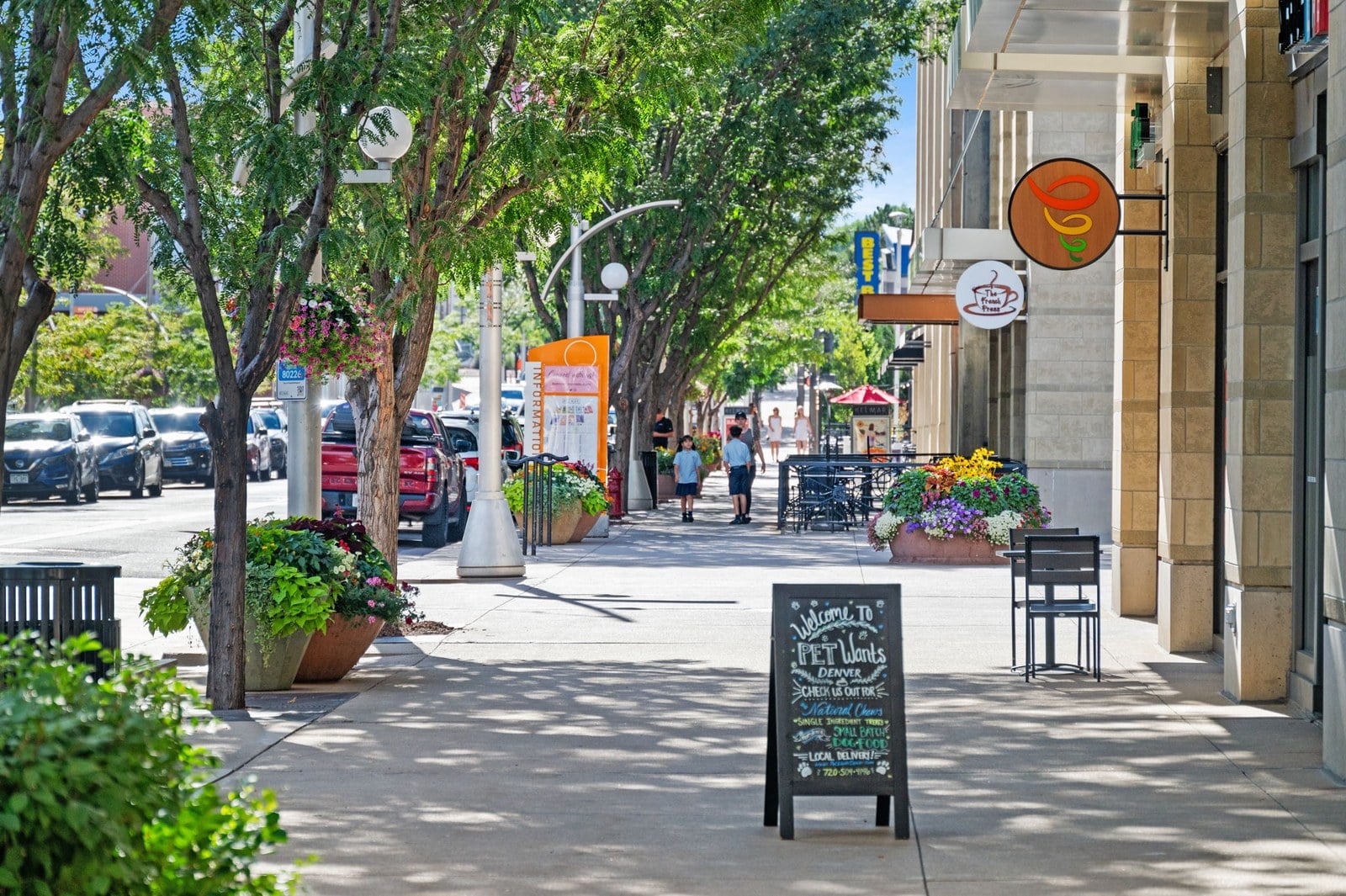
Denver’s genuinely walkable neighborhoods sit in a fairly tight ring around downtown, and they share a common shape: a commercial spine with housing on the blocks behind it. Berkeley has Tennyson Street. Highland has 32nd and Lowell. Platt Park has South Pearl. Baker has South Broadway. Sloan’s Lake has the lake itself plus the Edgewater Public Market just across Sheridan.
What you get is a life where the coffee shop, the dog park and dinner are a walk rather than a drive. What you give up is square footage, garage space and yard. The stock is largely pre-war bungalows on 4,700 to 6,250 square foot lots, plus newer duplexes and townhomes built on the same footprints. Two-car attached garages are the exception, not the rule.
These neighborhoods carry a premium precisely because walkable inventory is finite. Denver cannot make more pre-war blocks near a commercial street. If walkability is genuinely your top priority, plan to buy less house than your budget would buy three miles west, and treat that as the cost of the location rather than a bad deal. Our guide to where to live in Denver for walkability and character goes deeper on the specific blocks.
If space, yard, and value are what you are actually buying
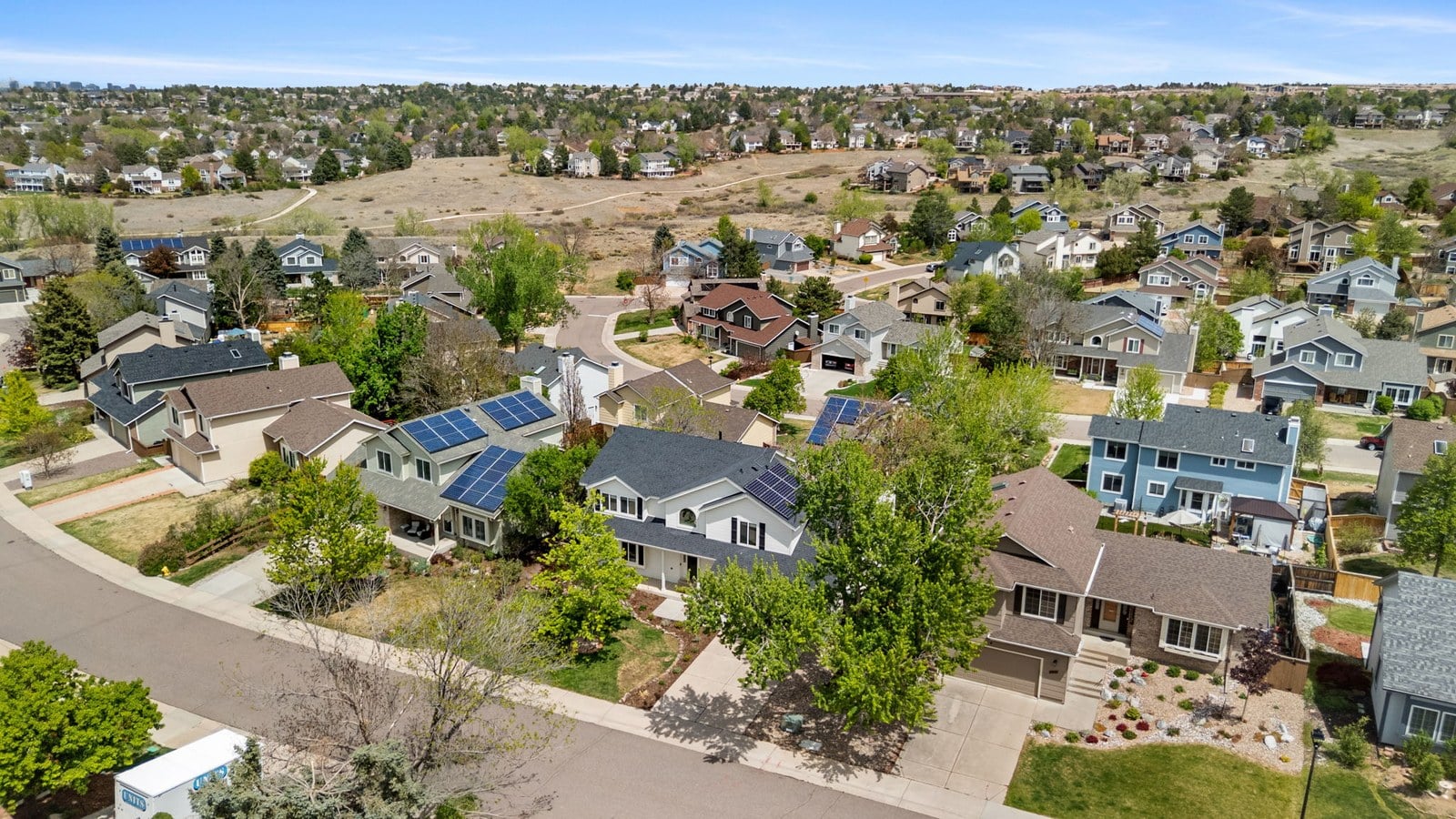
Head west and the math changes. Wheat Ridge, Applewood, Arvada and much of Lakewood are built on postwar ranch and split-level stock, on lots that frequently run a quarter acre or larger. Mature trees, real driveways, attached garages, and finished basements are normal rather than notable.
The trade is car dependence. You drive to the grocery store, and the good restaurant is a ten-minute trip rather than a ten-minute walk. Some pockets soften this, including the Ridge at 38 corridor in Wheat Ridge and Olde Town Arvada, which both function as genuine walkable centers inside otherwise suburban street grids.
Buyers also underestimate condition variance out here. A 1958 brick ranch that has been carefully updated and one still on its original electrical panel can list within $40,000 of each other and represent completely different projects. In central Denver the premium sits mostly in the dirt. West of Sheridan, much more of it sits in the systems, and inspection results move the final number more than they do closer in.
If the commute or the mountains are driving the decision
Two practical constraints reshape the map more than any lifestyle preference, and buyers tend to raise them last instead of first. The first is the commute. If someone in the household is downtown three or more days a week, the light rail lines and the bus network matter, and RTD‘s system map is worth an hour of study before you commit to an area. A neighborhood that is twenty minutes from the office on a Sunday afternoon can be fifty on a Tuesday morning, and no amount of yard makes that up over five years.
The second is mountain access. For households who ski, climb, or camp most weekends, proximity to the I-70 and US-285 corridors is worth real money, and it pushes the search toward Golden, Lakewood, Applewood and Arvada. For households who do not, that premium buys a life you are not living. Last year’s calendar usually settles which one you are.
What actually changes between neighborhoods, and what does not
A few things genuinely differ from one part of the metro to another, and are worth researching carefully:
- Property type and lot size. The single largest driver of what your budget buys.
- School attendance areas. Denver Public Schools, Jefferson County, and Adams 12 all operate differently, including on choice and enrollment.
- Water and sanitation providers. Applewood, for example, is served by Consolidated Mutual rather than Denver Water, which surprises buyers at closing.
- Access to parks and open space. Denver Parks and Recreation maintains a very different network than the Jefferson County open space system.
- Age and condition of housing stock, which drives inspection outcomes and renovation budgets.
What changes less than buyers expect is the pace of the market itself. Across July 2026 the metro sat at roughly 99 percent of list price with a median of 21 days in the MLS. Individual neighborhoods drift around that, but not by enough to justify choosing a place you do not want because you believe it is the better investment. Buy the neighborhood you will actually use.
Frequently Asked Questions
What is the most affordable neighborhood in Denver?
That framing usually leads people wrong, because the cheapest areas are cheap for reasons that matter: condition, noise, and commute. The better question is which property type gets you into a neighborhood you like. Attached homes centrally, or detached homes in Wheat Ridge, Lakewood and Arvada, are the two most common answers below the metro median.
How much house can I get for $500,000 in Denver?
It depends almost entirely on direction. In the walkable central neighborhoods, $500,000 generally means an attached home or a small, older bungalow needing work. West of Sheridan, the same number buys a detached postwar home with a garage and a yard, often one that needs updating.
Is it worth paying more to live closer to downtown Denver?
Only if you will use it. The premium on central neighborhoods buys walkability and proximity rather than square footage. If your weeks genuinely revolve around downtown offices, restaurants and events, it pays for itself in time. If they do not, you are buying an amenity you will drive past.
How do school boundaries affect where I should buy in Denver?
They matter, and they work differently here than in many metros: Denver Public Schools runs choice-based enrollment rather than strict boundaries, and surrounding districts each set their own rules. If schools are central to your decision, verify current attendance and choice rules with the district before you write an offer, not after.
Should I buy a condo or townhome to get into a better neighborhood?
It is a legitimate and common strategy, given the roughly $280,000 gap between detached and attached medians. Check the HOA’s reserves and budget, any special assessments, and the rental cap. Those affect your monthly cost and eventual resale far more than the finishes do.
What is the best neighborhood in Denver for families?
There is no consensus answer, and the honest one depends on what your family actually does on weekends. Households prioritizing yard space and quiet streets tend toward Applewood, Wheat Ridge and Arvada. Households prioritizing walkable amenities and shorter commutes tend toward Berkeley, Sloan’s Lake and Park Hill. Both groups are happy; they optimized for different things.
Narrowing this down is easier with someone who works across all of these areas rather than one of them. If you would like to talk it through, get in touch and we will send back a realistic list rather than a long one.
This article is general information about the Denver residential market and is not tax, legal, or financial advice. Market conditions change, and school enrollment rules, utility providers, and HOA terms should be verified directly with the relevant district, provider, or association before you rely on them in a purchase decision.