

The most walkable Denver neighborhoods for coffee shops and local restaurants are Berkeley (Tennyson Street), the Highlands and LoHi, Sloan’s Lake and Edgewater, and Platt Park’s South Pearl Street, where you can live within a short stroll of cafes, patios, and independent kitchens.
When buyers say they want a “walkable” neighborhood, they usually mean something specific: a morning coffee they can walk to, dinner spots they don’t have to drive to, and a main street that feels like a neighborhood rather than a strip mall. In west and central Denver, a handful of areas deliver exactly that, each with its own commercial spine.
The good news is that Denver’s most pedestrian-friendly pockets are clustered on the city’s west and near-north sides, close enough to compare a few in a single afternoon on foot. The trade-off is that walkability tends to command a premium, so the question becomes which street scene fits your routine and your budget.
Jason Sirois, a Denver Realtor with FORM at Compass Denver and a longtime Applewood resident, walks these districts with clients regularly. Below is a plain-spoken tour of where the coffee-and-restaurant walkability really lives, what day-to-day life looks like in each, and how to weigh the cost against the convenience.
- Berkeley / Tennyson Street — a compact, art-forward main street of cafes and independent shops.
- Highland & LoHi — Denver’s densest walkable restaurant scene around 32nd & Lowell.
- Sloan’s Lake & Edgewater — lakeside strolling plus a food-hall anchor off the water.
- Platt Park / South Pearl — a quieter street with a well-known Sunday farmers market.
- Washington Park / South Gaylord — a leafy cluster of coffee and casual dining by the park.
- Cherry Creek North & RiNo — polished retail on one side, warehouse-district energy on the other.
Berkeley and Tennyson Street
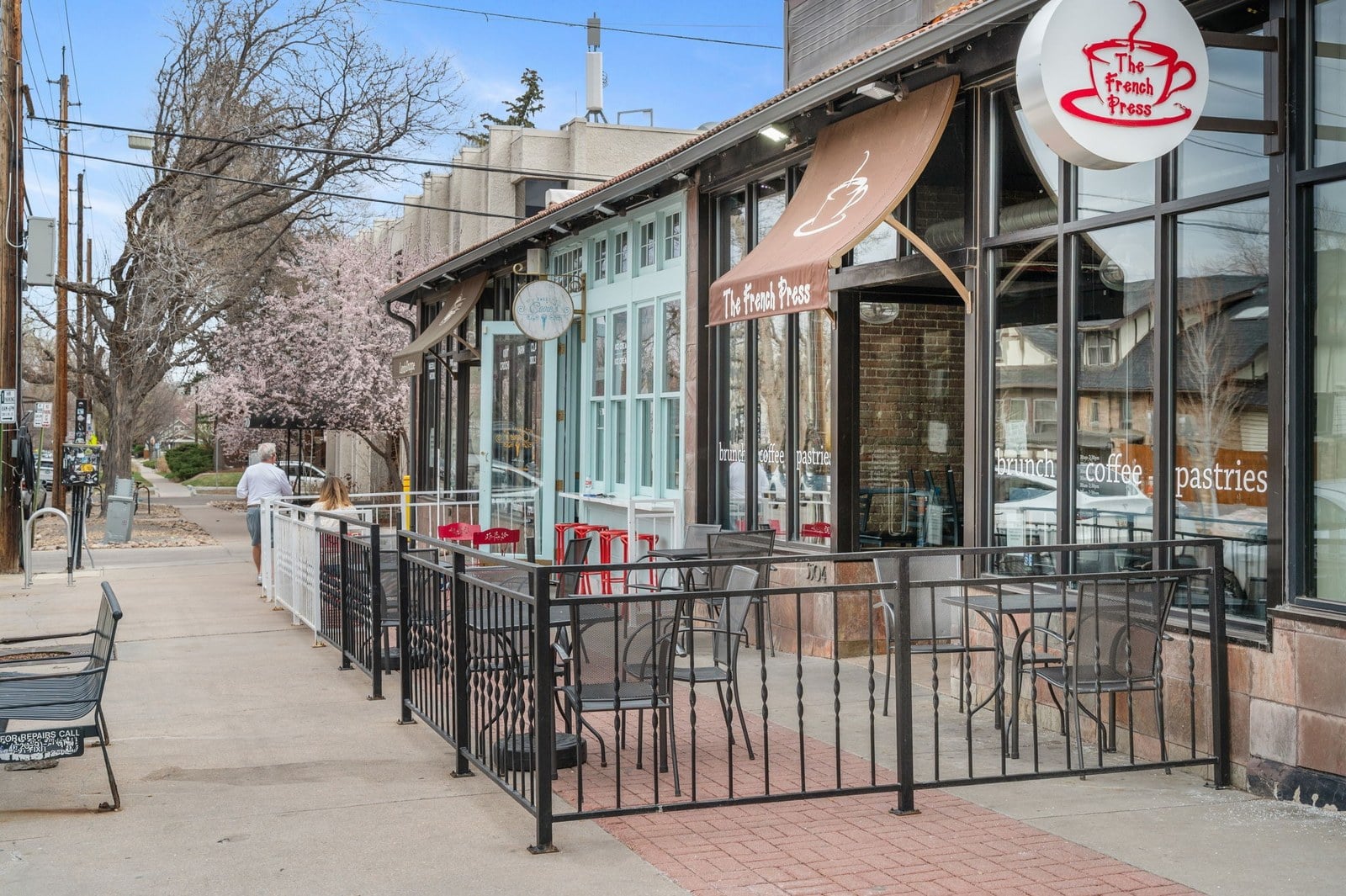
Berkeley is many buyers’ first stop when they picture a walkable Denver neighborhood, and Tennyson Street is the reason. The commercial stretch, roughly between 38th and 46th, packs coffee shops, bakeries, casual restaurants, breweries, and independent boutiques into a walkable string of storefronts, with a monthly art walk that turns the sidewalks into a social scene. It reads as a genuine neighborhood main street.
Day to day, that means an espresso in the morning, a dog walk past the shopfronts, and dinner out without moving your car. The residential blocks just off Tennyson mix bungalows, pop-tops, and newer infill, so households at different stages tend to find something, and Berkeley Park and Rocky Mountain Lake Park add green space within walking distance.
Berkeley suits people who want a lively but low-key street scene and don’t mind paying for proximity. Homes closest to Tennyson carry a premium, and the closer you sit to the action, the more foot traffic and parking pressure you accept, so walk it on a busy evening first.
Highland and LoHi
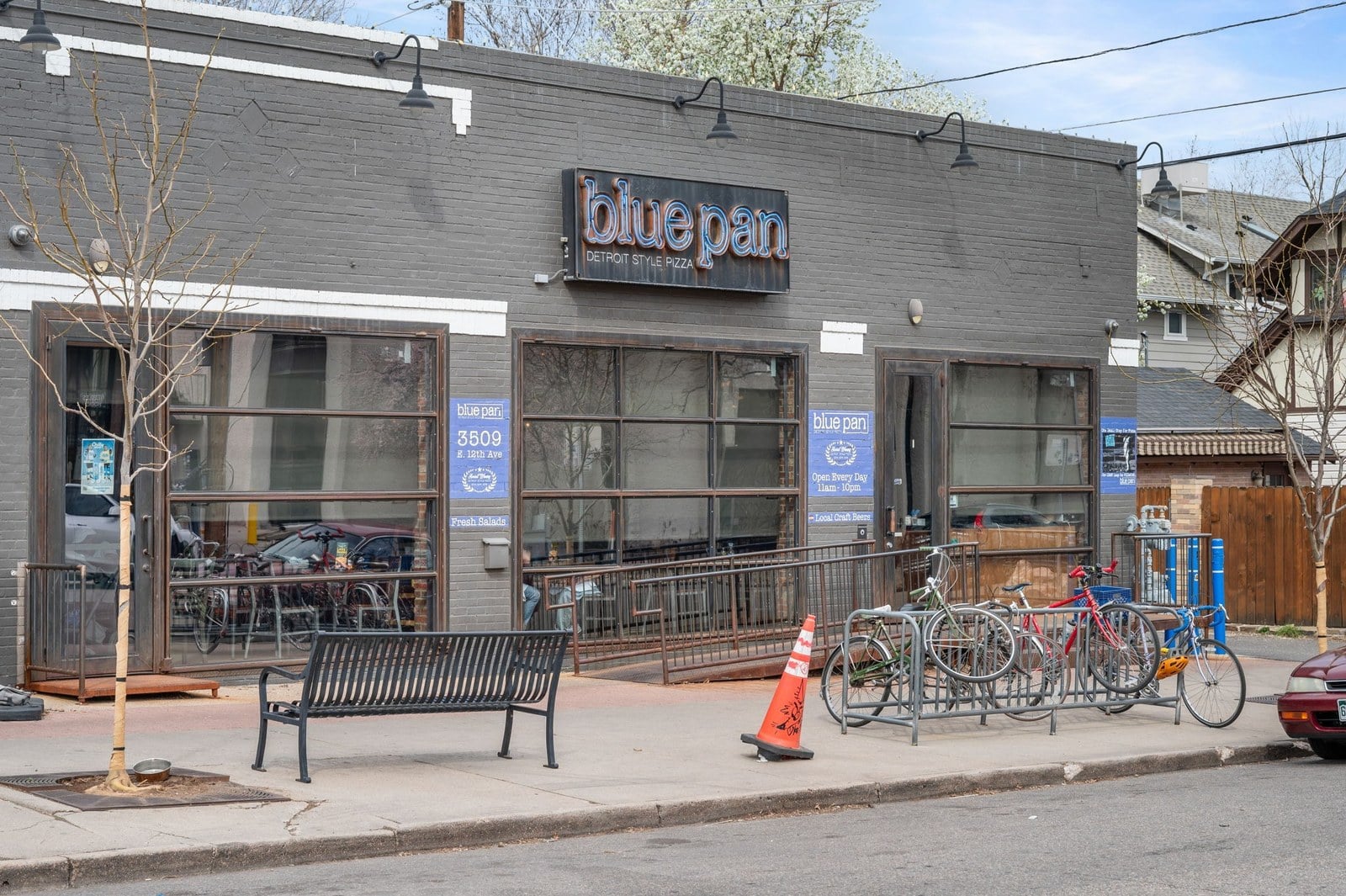
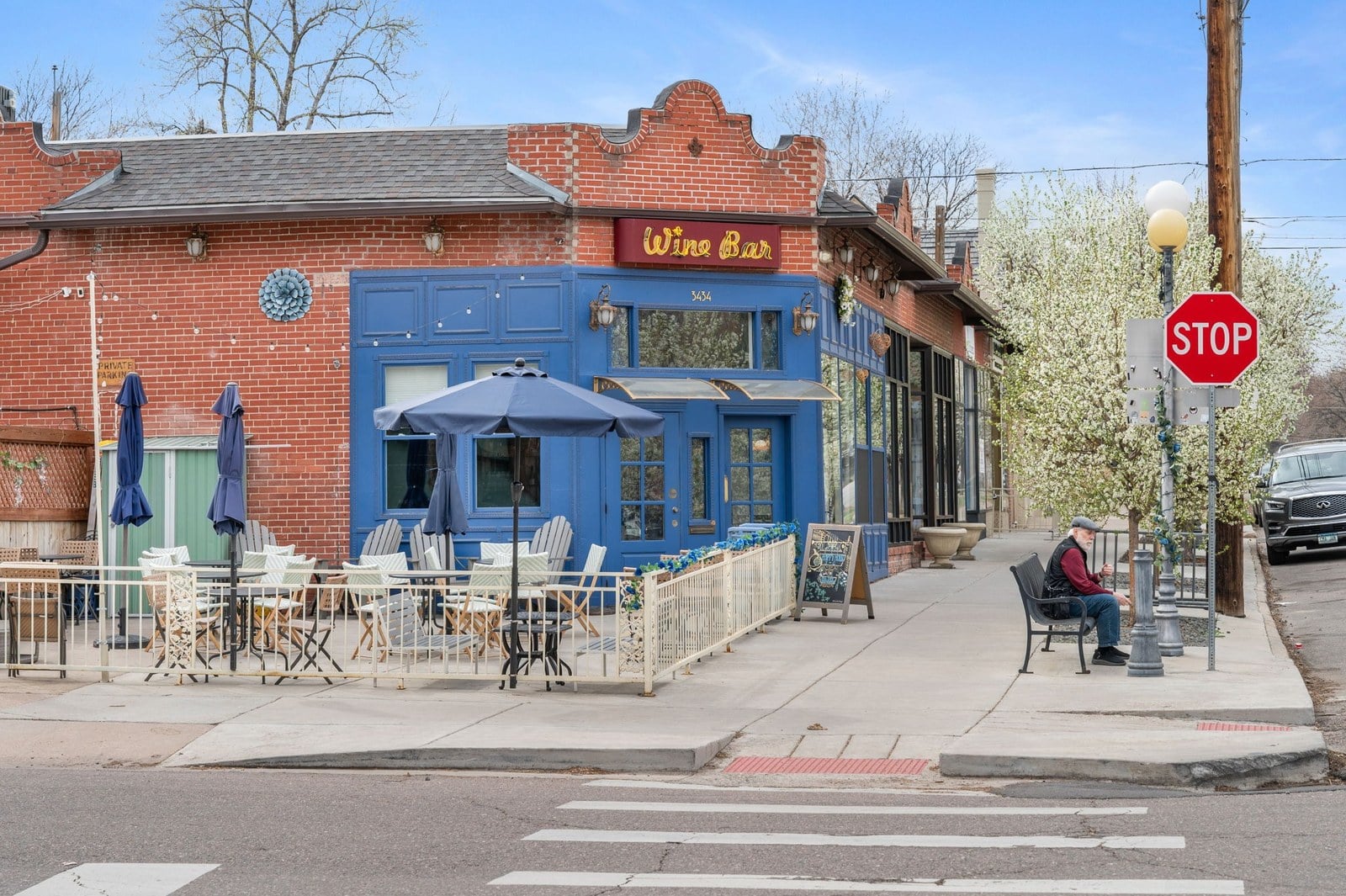
If you want the highest concentration of restaurants and cafes per block, the Highlands deliver it. West Highland centers on the 32nd & Lowell node, a compact intersection where coffee shops, wine bars, and sit-down restaurants cluster within a few walkable blocks, while Lower Highland (LoHi) around 32nd and the Highland Bridge leans denser and buzzier, with rooftop patios and quick access across the bridge into downtown and Union Station.
Living here means real car-optional days: walk to breakfast, work from a nearby cafe, meet friends for dinner, and reach downtown by bike or a short RTD ride. That density is the appeal and the catch: parking is tight, some blocks are busy at night, and the walkable core commands some of the higher price points on this list. It fits buyers who prioritize restaurant variety and proximity to the city center over a big yard, with housing that ranges from classic Victorians on the West Highland side to sleek townhomes closer to the river.
Sloan’s Lake and Edgewater
Sloan’s Lake offers a different flavor of walkability, built around the largest lake in Denver rather than a single retail strip. The perimeter path is a daily draw for walkers, runners, and cyclists, and the surrounding blocks have filled in with coffee spots and restaurants. Just west, the small city of Edgewater anchors the area with a popular public food hall that gathers independent vendors under one roof.
The rhythm here mixes recreation with dining: a lap around the lake, coffee afterward, dinner at the food hall or a nearby patio. It’s a good fit for people who want an active, outdoors-first routine with walkable food close by, without the wall-to-wall density of the Highlands, and the mountain views on clear days are a real draw.
The catch: the amenities are more spread out than on a tight main street, so “walkable” here often means a 10-to-15-minute stroll rather than a two-block hop. Homes with lake proximity or views carry a premium, and the mix of older bungalows and newer builds means condition and price vary block to block.
Platt Park, South Pearl, and Washington Park
Central and south Denver add quieter, tree-lined versions of the same idea. Platt Park’s South Pearl Street is a low-key stretch of cafes, restaurants, and shops that hosts a well-known Sunday farmers market in the warmer months, drawing neighbors on foot from the surrounding bungalow blocks. It feels calmer than Tennyson or LoHi while still giving you a real walk-to routine.
A little east, the South Gaylord Street cluster near Washington Park pairs a compact handful of coffee shops and casual restaurants with one of Denver’s best-loved parks. Both areas skew residential and family-friendly, with historic bungalows and a slower pace than the west-side hot spots.
These neighborhoods suit buyers who want walkability without constant activity outside their door, plus easy park access and a settled feel. The trade-off is a smaller menu of options than the denser districts, and proximity to the parks is priced in, but for families the calmer streets and green space often make the math worth it.
Cherry Creek North, RiNo, and What Walkable Really Costs
Two more districts round out the picture from opposite ends. Cherry Creek North is Denver’s most polished walkable shopping area, a grid of upscale retail, restaurants, and cafes with wide sidewalks and patios, for buyers who want refined dining and boutique shopping steps from home. River North (RiNo) brings a former warehouse district’s energy, with breweries, coffee roasters, and restaurants in converted industrial spaces and transit near the 38th & Blake station.
Across all of these areas, the honest theme is that walkability costs money. The blocks with the best coffee-and-restaurant access tend to price above comparable homes a mile away, and the most walkable options often mean less square footage, a smaller yard, or a townhome over a detached house. RTD bus and light-rail lines plus Denver’s growing bike network widen your reach in the densest pockets, but you’ll still weigh space against the stroll.
The right pick depends on your daily routine, so compare a few on foot at different times before you choose. For a broader look at how these areas stack up on more than walkability, our guide to the best Denver neighborhoods to live in is a useful companion read. When you’re ready to walk a few together, get in touch with Jason and the FORM team.
Frequently Asked Questions
What is the most walkable neighborhood in Denver?
For sheer restaurant and cafe density within a short walk, the Highlands and LoHi are hard to beat, with a compact core around 32nd & Lowell and quick access to downtown. Berkeley’s Tennyson Street is a close second and feels a touch more neighborhood-scaled. It depends on whether you prefer buzz or a quieter main street.
Are there cheaper walkable Denver neighborhoods?
Relatively, yes. Sunnyside, just east of Tennyson, and parts of Platt Park often price below the peak Highland and Cherry Creek North blocks while still offering walk-to coffee and dining. You typically trade some restaurant density or a prime address for the savings, and prices shift constantly, so compare current listings block by block.
Can I have a walkable neighborhood and still get a yard?
Often, yes, especially a block or two off the main commercial strip. Berkeley, Platt Park, and the Washington Park area have plenty of bungalows with real yards within a short walk of coffee and restaurants. The closer you get to the busiest storefronts, the more likely you are to see townhomes and smaller lots.
Which Denver neighborhood is best for coffee-shop culture?
Tennyson Street in Berkeley and the Highlands both have strong independent coffee scenes, with cafes that double as neighborhood living rooms, while RiNo adds serious coffee-roaster culture in a more industrial setting. If working from a cafe is part of your week, walk each one on a weekday morning to see which pace fits you.
Is it realistic to live car-free in Denver?
In the densest walkable pockets, like LoHi, parts of the Highlands, and RiNo, many residents go car-light, combining walking, biking, and RTD light rail or bus lines. It’s more feasible near transit stations and commercial cores. Most households keep a car but drive far less than they expected.
Neighborhood walkability and lifestyle fit are personal, and the coffee shops, restaurants, markets, and transit noted here can change over time. Confirm current businesses, hours, and RTD service before making decisions. This article is general information about Denver neighborhoods, not financial, legal, or investment advice.