

Buyers moving here from Dallas almost never open with “tell me about Denver.” They open with a neighborhood name. They loved Lakewood, or spent every weekend in Bishop Arts, or raised kids in Plano and want that again. The question underneath is simple: where is the Denver version of the place I already know? Most of the time there is one. Denver and Dallas grew in some of the same waves — streetcar suburbs before the war, ranch subdivisions after it, warehouse districts that emptied out and then filled back up with restaurants and murals. The architecture differs and the weather is not remotely the same, but neighborhood character rhymes across cities more than people expect. Below are the pairings we reach for most often with relocating Dallas clients, plus the structural differences that catch people off guard at the inspection. For the broader relocation picture, start with what to know before moving from Dallas to Denver.
- Lakewood or the M Streets → Washington Park, Bonnie Brae, Congress Park, South Park Hill
- Bishop Arts / North Oak Cliff → Tennyson Street in Berkeley, South Pearl in Platt Park, Baker
- Highland Park, University Park, Preston Hollow → Cherry Creek North, Hilltop
- Deep Ellum → RiNo · Uptown / Knox-Henderson → LoHi and Highland
- Plano or Frisco → Central Park, Superior, Louisville
If you loved Lakewood or the M Streets
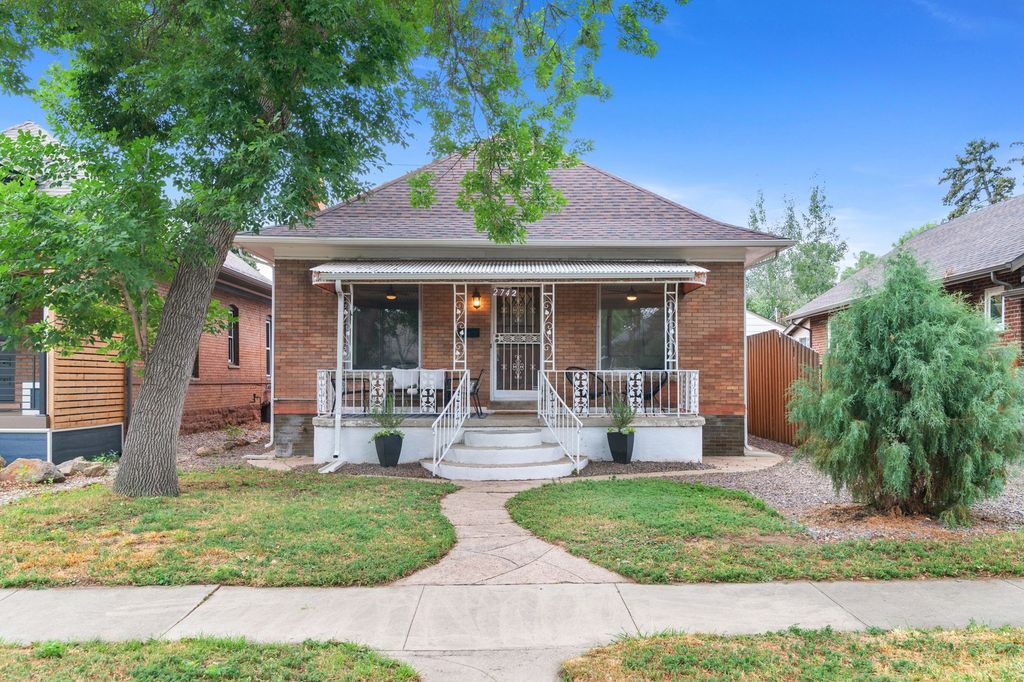
The easiest match on the list. Dallas’s Lakewood is pre-war housing in period-revival styles, wrapped around a signature body of water, with a walkable retail strip and a school-driven family buyer. Denver’s Washington Park is the same idea in brick: most houses built between 1900 and 1940 in Prairie School, Craftsman bungalow and Italianate styles, surrounding a 165-acre park with two lakes, ten tennis courts and two of the city’s largest flower gardens. South Gaylord Street plays the role of Lakewood’s commercial node. Bonnie Brae, just southeast, is the closest thing Denver has to the M Streets’ curated feel. Developer George Olinger hired landscape architect Saco DeBoer in 1923 to lay out curved streets that deliberately broke Denver’s grid; the subdivision filings were completed in April 1925. Steep-roofed Tudors are the signature, with Spanish, International and mid-century ranches around them. Congress Park and South Park Hill round out the group. Congress Park was platted in 1887, annexed in March 1889, and holds a long stretch of East Seventh Avenue Parkway inside Denver’s largest historic district. Park Hill reads wide and stately for a reason: the Park Hill Syndicate imposed 40-foot setbacks and a $3,000 minimum construction cost when a typical Denver house cost $1,000.
If you loved Bishop Arts or North Oak Cliff
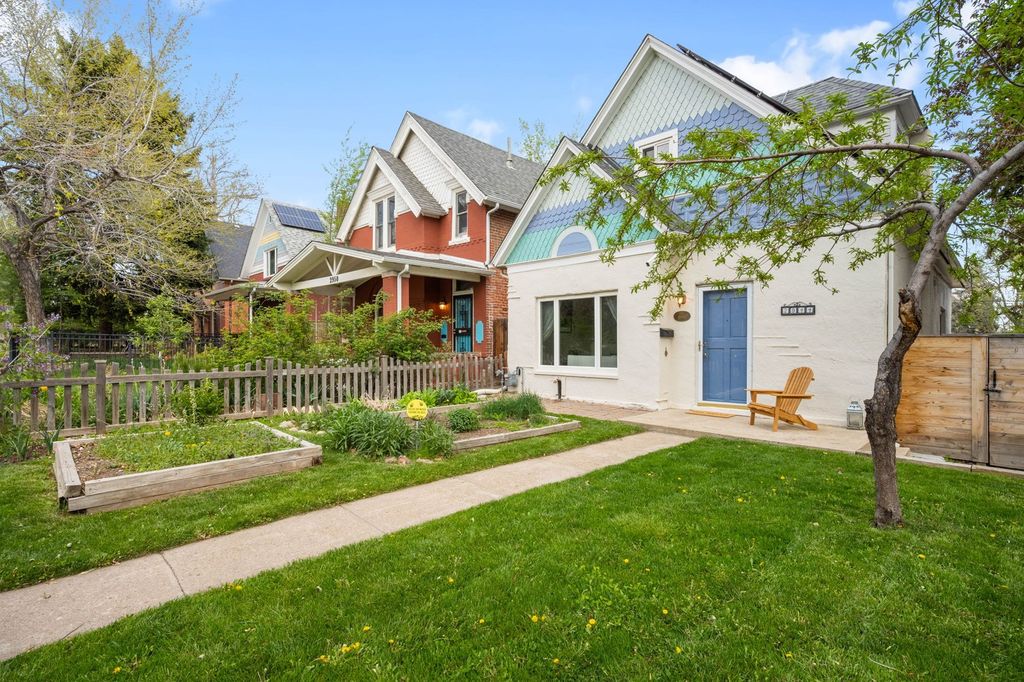
Bishop Arts is a streetcar-era commercial strip that went quiet for decades and came back through independent retail. Three Denver neighborhoods followed almost exactly that arc. Tennyson Street in Berkeley is closest in feel. Berkeley was its own town with its own post office from 1890 to 1896 and was annexed to Denver in December 1902; the strip gained real momentum after the original Elitch Gardens closed in 1994 and now runs monthly art walks. South Pearl Street in Platt Park has the same bones — the Denver Tramway Company extended its trolley line there in June 1893, the commercial boom ran from 1900 to 1915, and the street came back when artisans took the vacant storefronts. Baker, along South Broadway, is the grittiest: platted in 1872, more than 80 percent developed by 1900, and covered by a 150-acre historic district designated in 2000.
If you loved the Park Cities or Preston Hollow
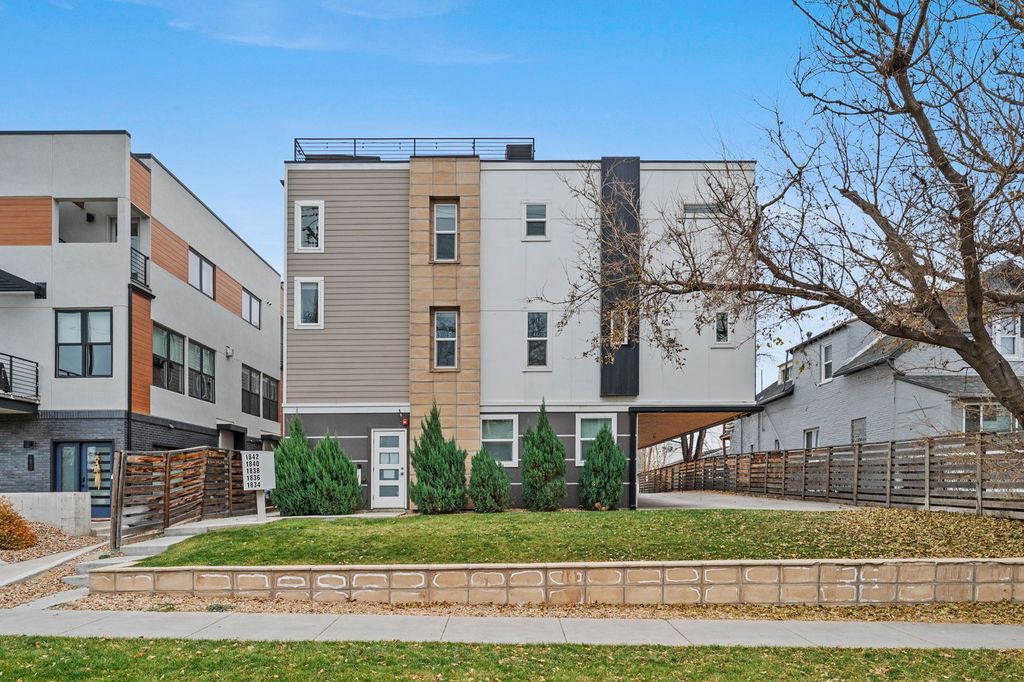
Two Denver neighborhoods split this role. Cherry Creek North handles the walkable, retail-adjacent side — a 16-block district of local shops and national brands north of East 1st Avenue. Hilltop handles the estate side: developed in the 1940s and 1950s, and since the 1990s many original houses have been demolished and replaced with much larger homes on medium-sized lots. If you have watched that happen block by block in Preston Hollow, Hilltop will feel familiar. One difference has no workaround. Highland Park and University Park are independent incorporated cities with their own school district, sitting inside Dallas but not governed by it. Denver has no equivalent — Cherry Creek and Hilltop are ordinary Denver neighborhoods inside Denver Public Schools. If municipal independence was part of what you were buying in the Park Cities, the closest analogues here are separate towns like Cherry Hills Village or Greenwood Village.
If you loved Deep Ellum, Uptown or Knox-Henderson
Deep Ellum to RiNo is the cleanest one-to-one pairing here. Both are rail-adjacent industrial districts of brick warehouses, both were reclaimed by artists and are now defined by commissioned murals, both filled in heavily with loft and mixed-use residential, and both are having the same argument about what gets lost. RiNo is a nonprofit arts district and one of the first certified Colorado Creative Districts, spanning four historic north Denver neighborhoods: Five Points, Cole, Globeville and Elyria-Swansea. Uptown and Knox-Henderson map to LoHi and Highland — dense, restaurant-heavy, walkable, full of young professionals. Highland was incorporated as a town in 1875 and a city in 1885 before residents voted to join Denver in 1896. The difference worth naming: Uptown Dallas is dominated by mid- and high-rise apartments, while LoHi still holds small-lot single-family and duplex housing among the new infill. You can actually buy a house there.
If you loved Plano or Frisco
Master-planned, school-driven, HOA-governed, built mostly in the last thirty years. Denver’s answer is Central Park, built on the old Stapleton International Airport site after it closed in 1995, with construction starting in 2001. At roughly 4,700 acres it is the largest residential neighborhood in Denver: an 80-acre central park, 50 parks in total, and a mix of single-family homes, row homes, townhomes and duplexes with alley-loaded garages. It was renamed from Stapleton in 2020 by a 63 percent resident vote. Further out, Superior and Louisville deliver the same profile with mountain views. One thing to know: the Marshall Fire destroyed 398 structures in Superior on December 30, 2021, and rebuilding has shaped that market since. Worth asking about any specific property there.
What actually changes when you move
Basements. Of new single-family homes started in 2023, 96.9 percent in the West South Central division — which is Texas — were built on slab. In the Mountain division the slab share was 52.9 percent. Denver homes commonly have finished below-grade space, priced and appraised differently than above-grade square footage. Two 3,000-square-foot houses in these two markets are not the same house. Air conditioning. In Texas, 95 percent of households have some air conditioning and 83 percent have central air. In Colorado those figures are 82 and 57 percent. Much of Denver’s pre-war housing was never built with central air, and evaporative “swamp” coolers remain common because the air is dry. Taxes. Texas has no state income tax and no state property tax either — local taxing units set every rate. Colorado has a flat 4.40 percent income tax and a much lower effective property tax burden, because the state taxes only a fraction of a home’s actual value. The Colorado Division of Property Taxation publishes the assessment rates and county detail. Whether the swap is a net win depends on your income relative to your home value, and that is a conversation for your CPA. Altitude and water. Denver sits at exactly one mile, 5,280 feet; Dallas is at 482. Denver averages around 14.5 inches of precipitation a year against roughly 39 in Dallas, which reshapes what a yard looks like — expect xeriscape and native plantings where you expected St. Augustine turf. If you are used to DART, RTD runs the metro’s bus and rail network.
Frequently Asked Questions
Is there a Denver neighborhood that is genuinely like Highland Park?
In feel, Cherry Creek North and Hilltop come closest — high price tier, mature trees, walkable retail, a strong scrape-and-rebuild dynamic. In governance, no. Highland Park is its own city with its own school district; Denver neighborhoods sit inside Denver and Denver Public Schools.
Will my Dallas house budget go further in Denver?
It depends on the pairing. Comparable in-town Denver neighborhoods generally sit at a higher price per square foot than their Dallas counterparts, while newer suburban product runs closer. Compare specific homes rather than metro averages — that is what the Perfect Home Finder is set up to do.
Which Denver neighborhoods have HOAs like Plano and Frisco?
Newer master-planned communities like Central Park and the Rock Creek area of Superior are HOA-governed. Most of Denver’s pre-war neighborhoods — Washington Park, Congress Park, Baker, Berkeley — are not. That is a real change in how much control you have over your own exterior, in both directions.
Is the west side of the metro worth looking at if I want space?
Yes, and out-of-state buyers routinely overlook it. Applewood, Wheat Ridge and parts of Lakewood offer notably larger lots and mature trees within about ten miles of downtown — the closest this metro gets to the lot sizes a Preston Hollow buyer expects.
How early should I start looking before the move?
Earlier than most people do. Spend a weekend walking two or three of these pairings before ranking anything — the details that decide it, like hill grade, tree cover and how loud a street is at 6 p.m., do not survive a listing photo. This article is general information, not tax, legal or financial advice. Tax mechanics and insurance costs vary by household and property; consult a qualified CPA or attorney about your situation. Jason Sirois is a Denver Realtor with FORM at Compass Denver and an Applewood resident. If you are moving from Dallas and want help sorting which of these neighborhoods fits, reach out.