


Moving from Chicago to Denver is one of the more common relocations we handle, and it tends to be an easier transition than people expect. Both are neighborhood-organized cities where people identify with their few square blocks more than with the city as a whole. If you can explain the difference between Logan Square and Lincoln Square, you will pick up the difference between Berkeley and Sloan’s Lake quickly.
Where the two cities genuinely diverge is housing stock, geography, and the rhythm of the year. Denver is less dense and less vertical, its inventory is a patchwork of 1920s brick bungalows, 1950s ranches and pockets of new infill, and the mountains on the western horizon shape everything from weekend traffic to what buyers will pay for a west-facing deck.
Jason Sirois is a Denver Realtor with FORM at Compass Denver and an Applewood resident who works with relocating buyers across the west and central metro. Below is the practical version of what he walks through with people flying in from O’Hare for a weekend of house tours — what to look at, what to ignore, and what usually surprises people in the first ninety days.
The housing stock is older, smaller, and built differently
Chicago buyers arrive expecting either a three-flat, a brick two-flat, or a 1990s-and-newer suburban colonial. Denver’s core neighborhoods offer none of those in quantity. What you will tour instead is the Denver Square and the bungalow — solid brick, built roughly 1900 to 1940, usually one or one-and-a-half stories, with a front porch and a detached garage off the alley. Move a ring out and the dominant type becomes the postwar brick ranch: single level, three bedrooms, a full basement, and a lot that is genuinely usable.
Two structural differences matter. First, basements here are far more often finished and count as real living space, so a “1,400 square foot” ranch may live like 2,400. Read the finished-below-grade number carefully, because it is priced differently than above-grade square footage. Second, very few homes have the wide side yards or the deep, narrow Chicago lot you may be used to; Denver lots are typically shallower and wider, which is why so many additions here go up rather than back.
The other adjustment is scale. A 4,000-square-foot house is uncommon inside Denver proper and much easier to find in Lakewood, Arvada, Wheat Ridge or Littleton. Buyers who need that footprint usually end up in the first suburban ring, which in Denver is a fifteen- to twenty-five-minute drive from downtown rather than the forty-five-minute commute the same trade would cost in Chicagoland.
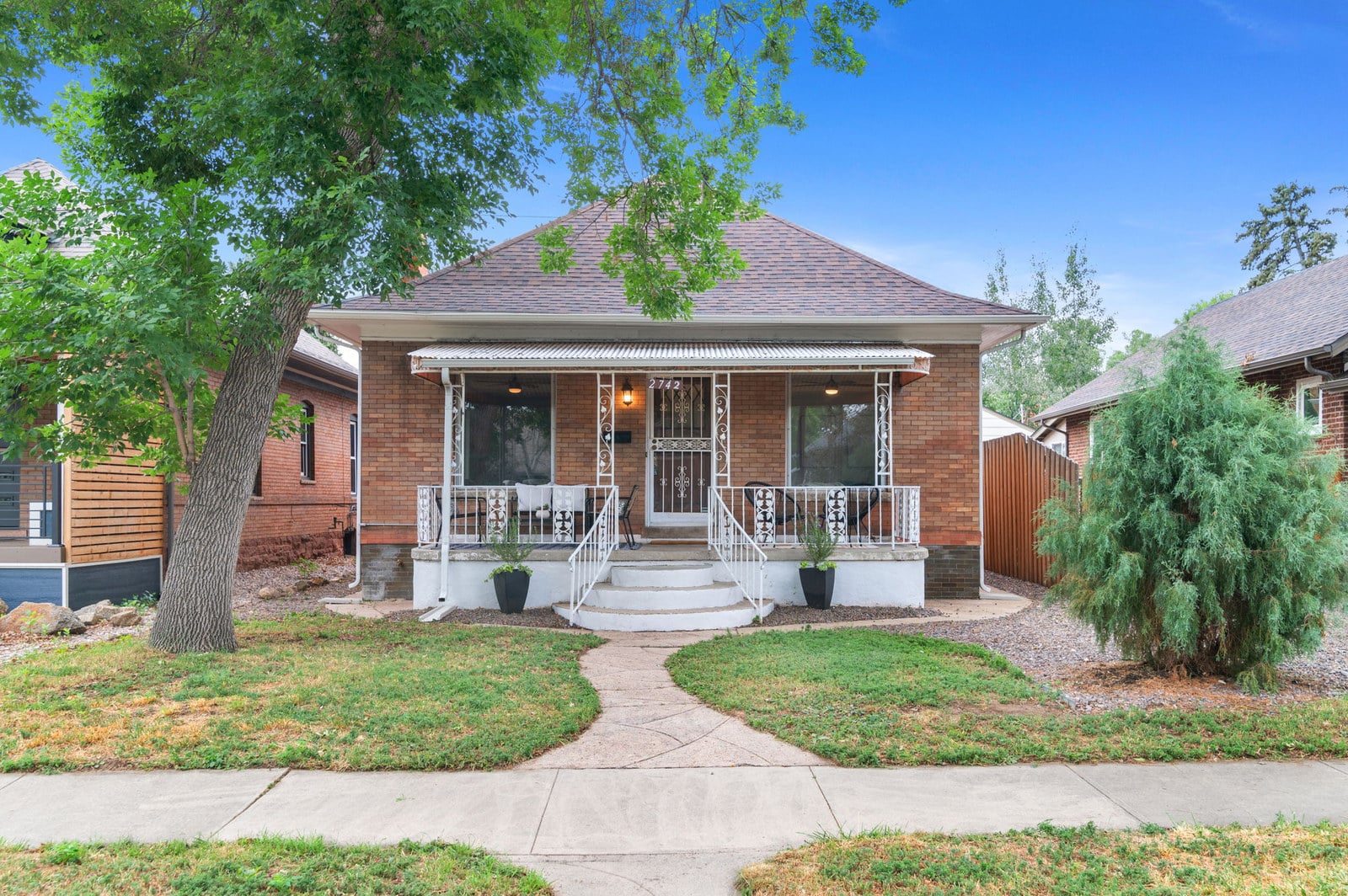
Neighborhoods that tend to click for Chicago transplants
There is no perfect one-to-one mapping, but patterns repeat. People who loved Lincoln Square or North Center tend to land in Berkeley and Sunnyside — bungalow blocks, a walkable main street (Tennyson Street here, rather than Lincoln Avenue), and a park at the center of the neighborhood’s social life. Bucktown and Wicker Park people usually gravitate to the Highlands and Sloan’s Lake, where the density is lower but the restaurant-per-block ratio is the closest thing Denver has.
Those coming from Oak Park, Evanston or Wilmette — wanting mature trees, good schools and an actual downtown of their own — look hardest at Wheat Ridge, Applewood, Edgewater and Littleton. Wheat Ridge in particular has become the west-side answer for buyers who want a quarter-acre lot, a two-car garage and a fifteen-minute drive to the foothills without leaving a real neighborhood behind.
South Loop and River North condo owners generally repeat the pattern here in RiNo, LoDo and Cherry Creek North. The one thing to check carefully in that segment is the building itself — reserve levels, HOA budgets and any special assessments — because Denver’s condo market is far smaller than Chicago’s and building-by-building differences carry more weight.

What your Chicago budget actually buys
The honest answer: less house, more land, lower carrying cost. Denver prices are higher than Chicago’s for comparable square footage, and that shock is real. But Colorado’s residential property tax burden is meaningfully lighter than Cook County’s, which changes the monthly math more than most buyers anticipate. Run the two side by side before you decide what you can carry, using your lender’s numbers rather than a national estimate.
Pace is the other difference. Well-priced, well-presented homes in the sought-after central and west-side neighborhoods still move quickly, while anything overpriced or deferred-maintenance-heavy sits. That split is more pronounced here than the metro-wide averages suggest, and the averages themselves shift month to month; the Denver Metro Association of Realtors market trends reports are the standard local source, and we can pull a block-level read for any neighborhood you are serious about.

Getting around: no L, but not all car
This is the adjustment Chicagoans feel most. There is no equivalent of the Blue Line at 2 a.m. RTD operates roughly ten rail lines across about 113 miles of track plus an extensive bus network, and the A Line from Union Station to Denver International Airport is genuinely excellent. But outside a handful of corridors, most households here keep a car, and many keep two.
What you gain is a trip that has no Chicago analogue: from most west-metro addresses you can be at a trailhead in thirty minutes and in the high country in ninety. That proximity is why buyers pay premiums for west-facing views, walk-out lots and garage space large enough for gear. If weekends in the mountains are the reason you are moving, weight your search toward the west side — Applewood, Wheat Ridge, Lakewood, Golden — and treat I-70 access as a real feature.
Altitude, weather, and the first ninety days
Denver sits about a mile above sea level, and the first two weeks are genuinely different: you will be thirstier, you will sleep worse, and a flight of stairs will remind you. Most people adjust within a month. Dry air is the longer-term change — humidifiers and an irrigation-savvy approach to landscaping both become normal.
The weather narrative is also miscalibrated. Denver winters are sunnier and, day to day, milder than Chicago’s; what Denver gets instead are heavy, wet spring snowstorms in March and April, followed by an afternoon-thunderstorm pattern in July and August. Hail is a real factor in this market — ask about roof age and roof material on every home you tour, and read the insurance quote before you waive anything.
Administratively, plan for a short list in the first three months:
- Transfer your driver license within 30 days of establishing residency — Colorado requires an appointment (see the state’s New to Colorado checklist).
- Title and register your vehicles within 90 days, through your county motor vehicle office rather than the state.
- Budget for emissions testing in the Denver-area program counties.
- Line up a roofer, an HVAC contractor and a sprinkler service before you need them.
- If you are buying, get fully underwritten before you tour. Sellers here read financing strength closely.
Frequently Asked Questions
Should I rent first or buy right away?
If you already know which side of town your job and your weekends point toward, buying directly is reasonable. If you are unsure whether you want walkable-and-urban or space-and-foothills, a six-month rental in a central location is cheap insurance. The two halves of this metro feel very different, and touring them as a resident beats touring them as a visitor.
How do Denver property taxes compare with Cook County?
Colorado’s effective residential property tax rates are among the lower ones in the country, and noticeably lighter than Cook County’s. That does not make the overall cost lower — purchase prices are higher — but it does mean your monthly payment comparison will look better than the sticker prices alone suggest. Confirm the specific figures with your lender and the county assessor.
Do I really need a car in Denver?
In LoDo, RiNo, Capitol Hill or parts of the Highlands, one car per household is workable and a car-free stretch is possible. Anywhere else, plan on driving. Denver’s transit is good along its corridors and thin between them.
What time of year is best to move here?
Late spring through early summer brings the most inventory, and late fall through winter brings less competition from other buyers. Chicago families usually target a summer move for school timing; if your timing is flexible, touring in November and December often means more negotiating room.
Which suburbs give the shortest commute downtown?
From the west, Edgewater, Wheat Ridge and Lakewood are typically fifteen to twenty-five minutes to downtown outside of peak. Arvada and Applewood run slightly longer. Compared with a Metra-and-expressway commute from the North Shore, nearly everything in this metro will feel close.
Is hail damage something I should worry about?
It is worth understanding, not fearing. Front Range hail claims are common enough that roof condition, roof age and impact-resistant materials are standard diligence items here. Ask for roof documentation during your inspection period and get an insurance quote early, since it can affect both cost and insurability.
How far in advance should I start looking?
Sixty to ninety days is a comfortable runway: enough time to narrow neighborhoods on one scouting trip, get fully underwritten, and be ready when the right home appears. Start with our Buyer’s Guide, then tell us what your weekends look like — that answer narrows the map faster than any other question.
This article is general information about relocating and the Denver-area housing market, not tax, legal, insurance or financial advice. Property tax treatment, insurance availability and registration requirements vary by county and by individual circumstance; please confirm details with the appropriate professional or agency.